

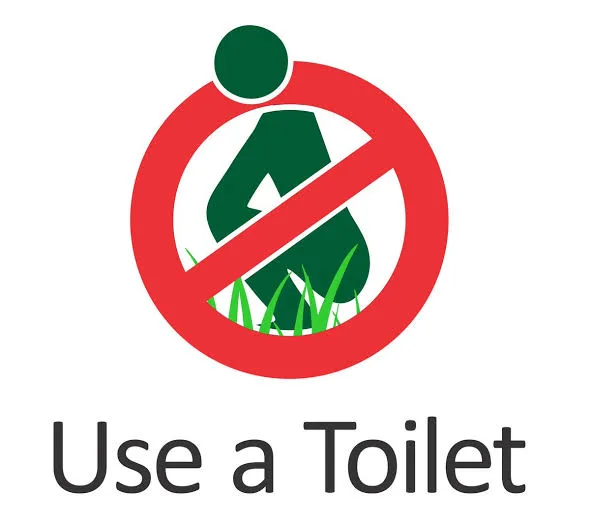
The Akwa Ibom State Government has set 2030 as its target for achieving Open Defecation Free (ODF) status, while expanding water and sanitation infrastructure and reforming land administration as part of efforts to improve living conditions and support economic development.
The latest measures were announced during a ministerial briefing at Government House in Uyo, where officials reviewed the implementation of the administration’s ARISE Agenda and outlined ongoing reforms in water supply, sanitation, land administration and urban development.
Commissioner for Information, Aniekan Umanah, said the administration had recorded more than 95 per cent implementation of its ARISE Agenda within three years, according to the state government.
In the water and sanitation sector, Commissioner for Water Resources and Sanitation, Ubuo Ubuo, said access to improved drinking-water sources had increased from 34.8 per cent to 78.5 per cent, while sanitation access rose from 29.3 per cent to 71.2 per cent.
He also reported that the proportion of households practising proper handwashing with soap increased from 47.5 per cent to 82.6 per cent, while household water treatment rose from 24.7 per cent to 69.4 per cent.
The figures, presented by the commissioner as WASHNORM-related improvements, form part of the state's broader push to strengthen water, sanitation and hygiene services.
A major component of the next phase is the planned deployment of 369 solar-powered water schemes, corresponding to the state's 369 wards.
According to Ubuo, sites have been identified and technical preparations completed, while procurement of some components has received approval from the State Executive Council. The initiative is intended to increase access to reliable water at the community level.
The government has also approved an Akwa Ibom State WASH Policy, a monitoring and evaluation framework and a roadmap for achieving ODF status by 2030.
The Water Users Association Law has also received assent, with the government saying the legislation will strengthen community participation in the management of water and irrigation facilities.
The state's sanitation drive is not entirely new. In 2025, the government announced the Keep Akwa Ibom Clean initiative as part of its strategy to eliminate open defecation by 2030, with emphasis on behavioural change, sanitation facilities and community participation.
Beyond sanitation, the government is also pursuing changes in the way land is administered across Akwa Ibom.
The Akwa Ibom Geographic Information System (AkwaGIS) is being used as the state's digital land administration platform. The official system provides services for land searches and verification, title applications and digital processing of land-related transactions.
The digital system is designed to make land records easier to verify, improve title security and reduce the risks associated with fraudulent or conflicting land transactions.
The government is also strengthening development control in Uyo and other major urban centres, including Eket, Oron and Ikot Ekpene. The broader objective is to support more orderly urban growth, enforce approved layouts and building standards, and address infrastructure and drainage challenges.
The state government has previously linked digital land administration with efforts to attract investment by making land transactions more transparent and accessible.
Taken together, the water, sanitation and land reforms point to an approach that combines public-health improvements with changes designed to make land administration and urban development more structured.
For Akwa Ibom, the 2030 sanitation target will require sustained investment in water infrastructure, household sanitation, community engagement and behavioural change. At the same time, the expansion of digital land services is expected to give residents and prospective investors greater access to verified land information.
The administration says the broader goal is to build systems that support healthier communities, more secure land ownership, orderly urban development and an environment capable of supporting economic activity beyond the state's traditional dependence on oil.
Reporting by TalkNaijaMedia




Reader Comments (0)
No comments yet. Be the first to share your perspective on this report.