

Nigeria and the United States signed a five-year health cooperation Memorandum of Understanding (MoU) on December 19, 2025. The agreement is designed to strengthen disease surveillance, laboratory capacity, primary healthcare, support for frontline health workers and access to essential medical supplies.
Under the arrangement, the United States is expected to provide nearly $2 billion in health grants, while Nigeria plans to mobilise about $3 billion in domestic health financing over the same period, running from April 2026 to December 2030.
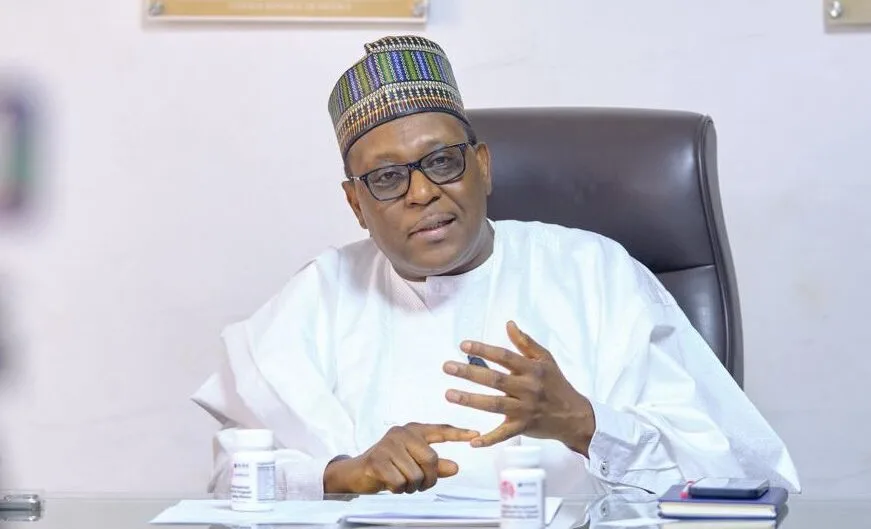
Pate said the transition was intended to increase Nigeria’s ownership of its health programmes and gradually reduce reliance on external funding. He maintained that long-term dependence on assistance from other countries was not in Nigeria’s national interest.
The minister acknowledged that achieving sustainable health financing would require greater domestic investment and contributions from the federal, state and local governments. He also highlighted the importance of strengthening the country’s ability to fund essential health services as foreign assistance changes.
According to the Federal Ministry of Health and Social Welfare, Nigeria has committed to allocating at least six per cent of executed annual federal and state budgets to health, a target projected to mobilise close to $3 billion in domestic financing during the five-year transition period.
Pate said 15 Nigerian government institutions, including the ministries responsible for health, finance and foreign affairs, were involved in developing the country’s position during negotiations with the United States.
For about 25 years, US assistance has supported programmes addressing major public health challenges, including HIV, tuberculosis and malaria. The proposed transition is expected to give Nigeria greater responsibility for sustaining these programmes while building local capacity to finance and deliver healthcare.
Addressing concerns about the agreement, Pate described the MoU as a non-binding framework governed by Nigerian policies and laws. He said either party could withdraw from the arrangement and maintained that it did not override Nigeria’s sovereignty.
The minister also said the agreement supported the government’s Health Sector Renewal Investment Initiative, which focuses on improving governance, strengthening primary healthcare, expanding health insurance coverage, boosting domestic production and improving health security.
He added that cooperation would support public health and laboratory systems, including the detection of antimicrobial resistance, while encouraging greater local production of essential health commodities and medicines.
Nigeria’s efforts to strengthen domestic pharmaceutical and medical supply capacity are intended to make essential products more readily available and reduce vulnerability to disruptions in international supply chains.
The announcement comes as Nigeria prepares to host the fifth Global High-Level Ministerial Conference on Antimicrobial Resistance in Abuja from December 6 to 8, 2026. The conference will bring together government representatives and health stakeholders to advance practical action against drug-resistant infections under a One Health approach.
The government’s proposed investment marks a significant financing target, but achieving it will depend on whether public budgets deliver the promised allocations, whether funds are released and spent effectively, and whether all levels of government sustain their commitments.
As external contributions gradually decline, Nigeria will face the challenge of ensuring that essential health programmes remain funded and that citizens continue to receive reliable, affordable healthcare.
Reporting by TalkNaijaMedia



Reader Comments (0)
No comments yet. Be the first to share your perspective on this report.