

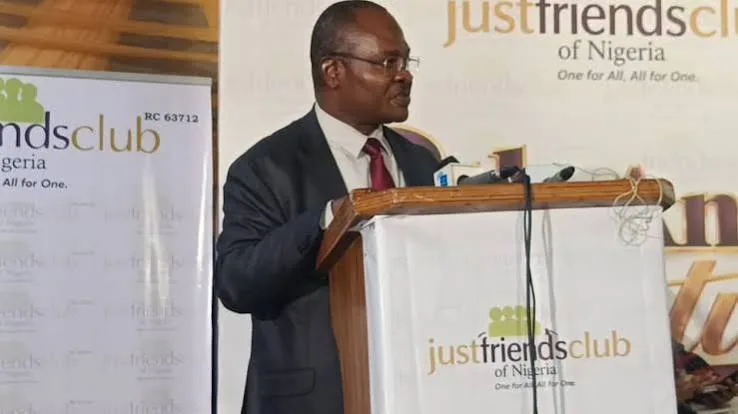
They made the call at the eighth annual public lecture of the Just Friends Club of Nigeria (JFCN), held in Abuja under the theme, “From Concern to Action: Making Our Votes Count in the 2027 General Elections.”
Nwankwo, who delivered the lecture, argued that widespread frustration would not automatically produce political change without citizens taking deliberate steps to influence governance. He expressed concern that some Nigerians, particularly those in the middle class, were increasingly relying on private solutions to public-service failures rather than joining collective efforts to demand improvements.
He pointed to the growing use of generators and solar power to cope with unreliable electricity, alongside reliance on private schools and healthcare services. While acknowledging that these options may help households manage immediate difficulties, he warned that depending solely on individual solutions could weaken the shared pressure needed to improve public institutions.
The discussion illustrated this concern with an example of residents in an affluent Abuja neighbourhood who reportedly complained about levies imposed by local authorities in a WhatsApp group but did not pursue a coordinated response. Instead, some were said to have opted for individual settlements.
The example highlighted the difference between expressing dissatisfaction and taking collective action through appropriate channels to seek transparency, fairness and accountability.
Nwankwo and Abdu also raised concerns about the relationship between civic engagement and the responsibilities of civil society organisations. Although non-governmental organisations provide important assistance to vulnerable communities, the speakers cautioned that their work should complement government responsibilities rather than become a permanent replacement for public services.
They further warned that electoral apathy among eligible voters could undermine democratic accountability. The speakers argued that citizens who have the capacity to participate in public debate but fail to vote risk surrendering their influence over leadership choices and government policies.
With the 2027 elections approaching, they encouraged Nigerians to take practical steps beyond expressing grievances, including making informed voting decisions, monitoring elections, documenting polling-unit results and supporting efforts to protect the integrity of the electoral process.
JFCN President Amaechi Aloke said the lecture’s theme was chosen to encourage citizens to reflect on their role in shaping the country’s future. He noted that Nigerians frequently discuss the country’s challenges at home, in workplaces, communities and across traditional and social media, but said concern must be translated into meaningful participation.
Aloke emphasised that responsible citizenship should continue beyond election day through sustained engagement with public institutions and demands for accountability. He also quoted political thinker Frantz Fanon on the responsibility of each generation to identify and fulfil its mission.
He explained that Nwankwo was selected to deliver the lecture because of his longstanding involvement in democracy and governance. Nwankwo co-founded the Civil Liberties Organisation in 1987 with human rights lawyer Olisa Agbakoba and currently leads PLAC, which works on democratic governance, legislative engagement and electoral accountability. He also convenes the Civil Society Situation Room, a coalition involved in election observation and civic advocacy.
Aloke said the club’s annual lecture series, established in 2014, had addressed a range of national issues, including economic reforms, public debt, infrastructure, security, electoral politics and the cost of governance. Previous speakers have included former public officials, academics, clergy and human rights advocates.
The club also carries out social support activities, according to Aloke. These include visits to homes for older people and orphanages, assistance for children with disabilities, career guidance in public schools and educational sponsorship for eight secondary school students from low-income backgrounds in Abuja.
He said these initiatives reflected the club’s view that responsible citizenship involves not only political awareness but also practical contributions to society.
As Nigeria moves towards the 2027 general elections, the speakers’ central message was that public frustration must be channelled into informed voting, collective civic action and sustained demands for accountability. They argued that meaningful democratic participation requires citizens to remain engaged before, during and after elections.
Reporting by TalkNaija Media




Reader Comments (0)
No comments yet. Be the first to share your perspective on this report.