

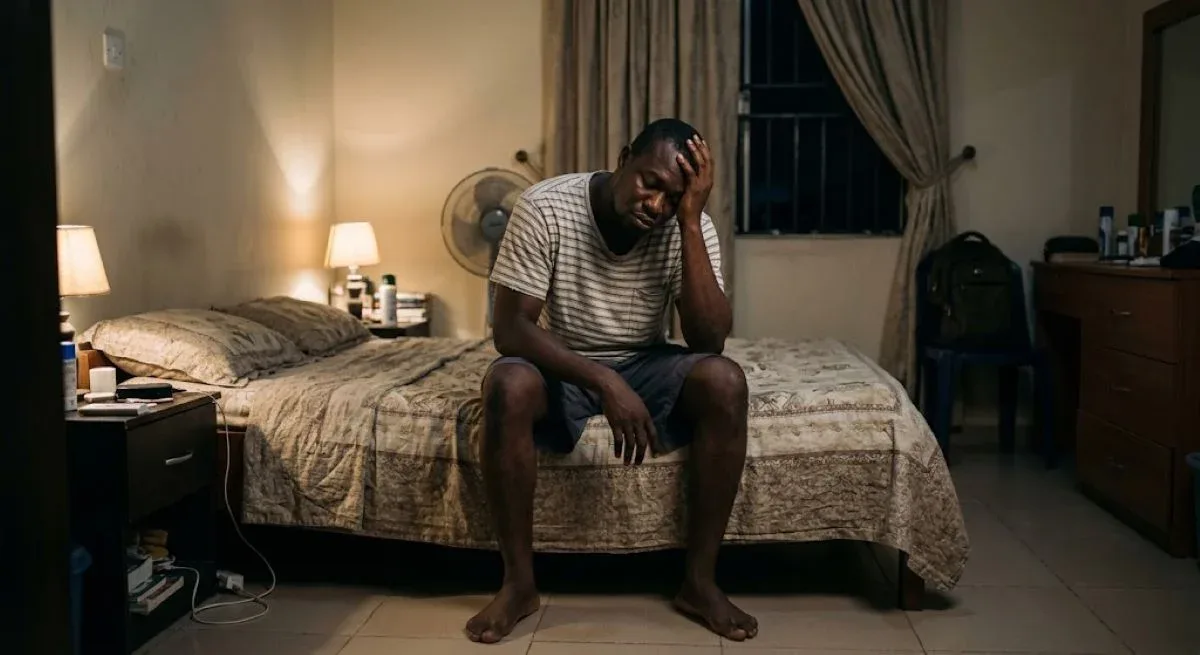
The study was conducted by researchers including Thomas Kraemer of the University of Zurich and explored whether sleep loss leaves measurable changes in the body’s metabolic profile that can be detected in oral fluid.
Sleep deprivation can affect concentration, coordination, alertness and reaction time, increasing the risk of road accidents and mistakes in workplaces where sustained attention is essential. However, there is currently no widely established clinical test that can directly determine whether a person is dangerously sleep-deprived.
To investigate the possibility of developing such a test, the researchers recruited 20 healthy young men who normally slept between seven and nine hours each night.
Each participant experienced three sleep conditions in a random order, with a week between sessions. These involved staying awake for an entire night, sleeping for six hours per night over four consecutive nights, and following a well-rested schedule that provided approximately eight hours of sleep.
The team collected saliva samples before and after each condition and analysed them for metabolites, which are small molecules produced during the body's biological processes.
The analysis identified 10 molecular differences between samples collected after total sleep deprivation and those obtained when participants were well rested. Researchers used the findings to develop a machine-learning model capable of distinguishing sleep-deprived samples from rested ones.
The model correctly classified samples 94 per cent of the time, suggesting that saliva may contain a measurable biochemical signature of acute sleep loss.
However, the findings also revealed an important limitation. The researchers found no significant metabolic differences between the well-rested participants and those who had experienced four nights of restricted sleep.
This means the test showed promise for detecting a full night without sleep but did not demonstrate the same ability to identify the more moderate sleep restriction examined in the study.
The researchers also observed that some participants had not returned to a fully rested metabolic profile after recovering with eight hours of sleep following a period of total sleep deprivation. Individual differences in how people respond to and recover from sleep loss may therefore affect the test’s performance.
The findings could eventually support the development of a non-invasive test for use in clinical, occupational and forensic settings. One potential application would be roadside screening to help assess whether drivers are suffering from acute sleep deprivation.
Such a test could also be relevant to shift workers and others whose jobs require them to remain alert for extended periods. However, the research does not establish that a saliva test is ready for routine use by police, employers or healthcare professionals.
The study was based on only 20 young men, meaning further research is needed to establish whether the findings apply reliably to women, older adults, frequent drivers and people with different work schedules.
Kraemer and his colleagues are pursuing a larger international assessment involving more than 1,000 saliva samples from groups including shift workers, women and frequent drivers. The expanded research is expected to help determine how well the model performs across a broader range of people and real-world circumstances.
Until that validation is completed, the reported 94 per cent accuracy should be understood as a result from the initial study rather than a guarantee of performance in everyday screening.
The research nevertheless offers a promising step towards objective biochemical detection of acute sleep deprivation, although more evidence will be needed before the approach can be considered a dependable practical test.
Reporting by TalkNaijaMedia




Reader Comments (0)
No comments yet. Be the first to share your perspective on this report.