

Speaking in an interview with BusinessDay, Ajijola said Nigeria’s trade infrastructure needed to extend beyond its seaports, noting that businesses require efficient systems to move goods from ports to the markets where they are ultimately needed.
He said TRÏNŪ’s ambition was to develop Abuja into a strategic inland trade hub capable of supporting importers, manufacturers, traders, clearing agents and small businesses across the northern region.
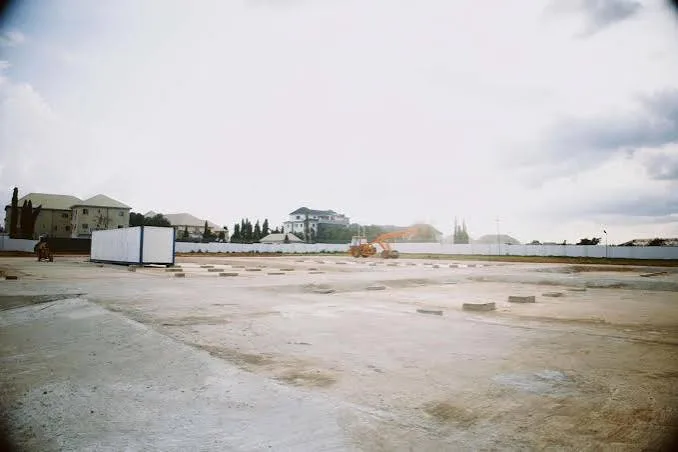
The company recently commissioned a customs-controlled bonded warehouse in Kuje, Abuja, creating an additional option for businesses seeking to store and clear imported cargo closer to their destinations.
The facility, operated by TRÏNŪ, a subsidiary of Sirlyon Limited, has a reported capacity of approximately 700 containers. Its services include container and general cargo storage, cargo handling, consolidation, customs documentation and clearance support, as well as accommodation for Customs and other regulatory agencies.
Under the bonded-warehouse arrangement, eligible cargo can be transported from seaports to the facility under Customs bond, where it can be stored and processed in line with applicable regulations before release.
Ajijola said the decision to establish the facility in Abuja followed the need to provide businesses in the Federal Capital Territory and Northern Nigeria with better access to trade infrastructure without depending entirely on facilities located near the coast.
He explained that the company wanted to simplify the movement of goods by coordinating warehousing, customs-related processes and transportation, while using technology to improve visibility and operational efficiency.
According to him, TRÏNŪ plans to introduce digital cargo tracking, real-time shipment updates, automated inventory management and data-driven planning to help customers monitor their consignments and manage logistics more effectively.
The company also intends to strengthen coordination between importers, clearing agents, transport operators and other stakeholders involved in the supply chain. Ajijola said the approach would help address avoidable delays, unnecessary cargo movements and costs that affect businesses.
He acknowledged that infrastructure limitations, rising operating expenses and administrative bottlenecks remain challenges for logistics operators in Nigeria. However, he said partnerships, technology adoption and carefully planned expansion could help reduce inefficiencies.
The CEO identified importers, traders, manufacturers, freight forwarders, clearing agents and small and medium-sized enterprises as key beneficiaries of the facility. By providing an inland location for cargo storage and clearance, the company hopes to make supply chains more predictable for businesses serving Abuja and neighbouring markets.
Ajijola also highlighted the potential for the facility to support regional trade. He described Northern Nigeria as an important commercial gateway with connections to neighbouring countries, including Niger and Chad, and said improved logistics infrastructure could create opportunities for businesses seeking to reach wider African markets.
On the facility’s projected contribution to trade, he said TRÏNŪ expects to facilitate billions of naira in annual trade as operations expand, customer demand grows and cargo-handling capacity increases. He stressed that the actual volume would depend on market demand, operational capacity and the pace of expansion.
The company’s longer-term ambition is to develop beyond a single warehouse by investing in a broader network of bonded warehousing and inland logistics infrastructure across Nigeria.
Ajijola said the business also intends to contribute to human-capital development through practical training, mentorship and workplace learning for Nigerians interested in warehousing, customs operations, transportation, technology and supply chain management.
He added that the company expects its growth to create opportunities not only for its direct workforce but also for transporters, clearing agents, suppliers and other businesses operating within the logistics ecosystem.
The Kuje facility comes amid broader efforts to modernise customs operations and improve trade facilitation in Nigeria. Its contribution to reducing costs and delays will depend on how effectively it works with the Nigeria Customs Service, transport operators and existing port and inland distribution networks.
For TRÏNŪ, the objective is to make cargo services more accessible to businesses outside the country’s coastal commercial centres and help connect Northern Nigeria more efficiently to domestic and international markets.
Reporting by TalkNaija Media





Reader Comments (0)
No comments yet. Be the first to share your perspective on this report.