

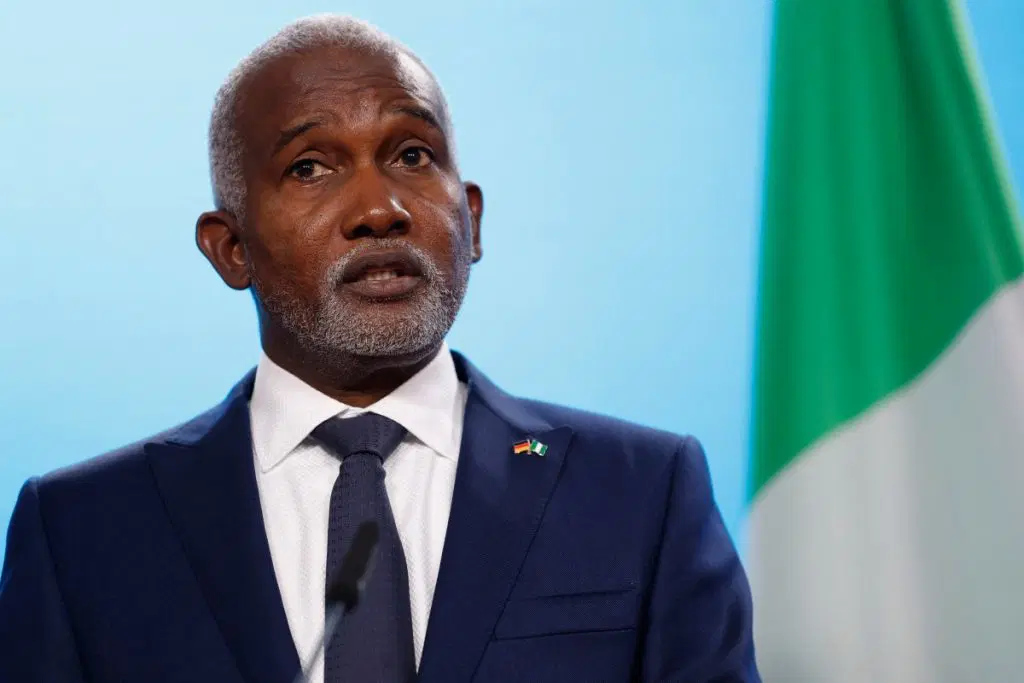
The former minister expressed concern over recurring incidents of hostility against Nigerians and other Africans in South Africa, arguing that such treatment contradicts the solidarity African countries demonstrated during the struggle against apartheid.
He said it was particularly disappointing that Nigerians and other black Africans were facing discrimination in a country whose liberation attracted significant political, financial and diplomatic support from Nigeria and other African nations.
Reflecting on Nigeria's historical involvement in the anti-apartheid struggle, Tuggar recalled how the country supported South African students who survived the June 1976 Soweto uprising, including providing educational opportunities and scholarships.
He also highlighted the establishment of the Southern Africa Relief Fund in 1976, which supported people affected by racial oppression and liberation struggles across Southern Africa.
According to him, Nigeria's commitment extended beyond public statements, as the country made considerable sacrifices to support the fight against apartheid and minority rule.
Tuggar described the hostility against black Africans in South Africa as Afrophobia, arguing that the term better captures the racial dimension of the discrimination, particularly where other foreign nationals appear to experience different treatment.
He stressed that historical and political circumstances could help explain the roots of discrimination but should never be used to justify hostility against people because of their nationality or background.
The former minister also traced some of Africa's persistent divisions to colonial administrative structures, which he said created and reinforced ethnic, cultural and economic divisions that continue to influence relationships across the continent.
Beyond the problem of discrimination, Tuggar argued that Africa must strengthen economic cooperation if the vision of genuine continental unity is to become a reality.
He maintained that African countries could not achieve meaningful economic independence while depending heavily on the export of raw materials and the importation of finished products.
He therefore called for greater investment in manufacturing, industrialisation and regional trade, identifying the African Continental Free Trade Area (AfCFTA) as an important platform for expanding economic cooperation and strengthening the continent's productive capacity.
Tuggar's position was reinforced by the keynote address delivered by Professor Lumumba, who also called for stronger African integration and a renewed commitment to economic independence.
Lumumba argued that political independence would remain incomplete without economic freedom. He advocated a common African market, easier movement of people across national borders and increased investment in local industries.
He also encouraged Africans to support locally manufactured products as part of efforts to reduce dependence on external economies.
Earlier, the President of The Bridge Club, Abdulhakeem Mustapha, SAN, said the event's theme, Xenophobia Contradicts Pan-Africanism, was intended to challenge the gap between Africa's public commitment to unity and the treatment of fellow Africans in different countries.
Mustapha maintained that African solidarity must be reflected in everyday conduct, institutional policies and relationships among citizens, rather than being limited to diplomatic speeches and political agreements.
The gathering brought together professionals, diplomats, business leaders and other stakeholders to examine the causes of xenophobia and discuss practical ways of strengthening African cooperation.
The discussions underscored the need for African governments and citizens to promote tolerance, protect the dignity of fellow Africans and build stronger economic relationships across national borders.
Reporting by TalkNaijaMedia




Reader Comments (0)
No comments yet. Be the first to share your perspective on this report.