

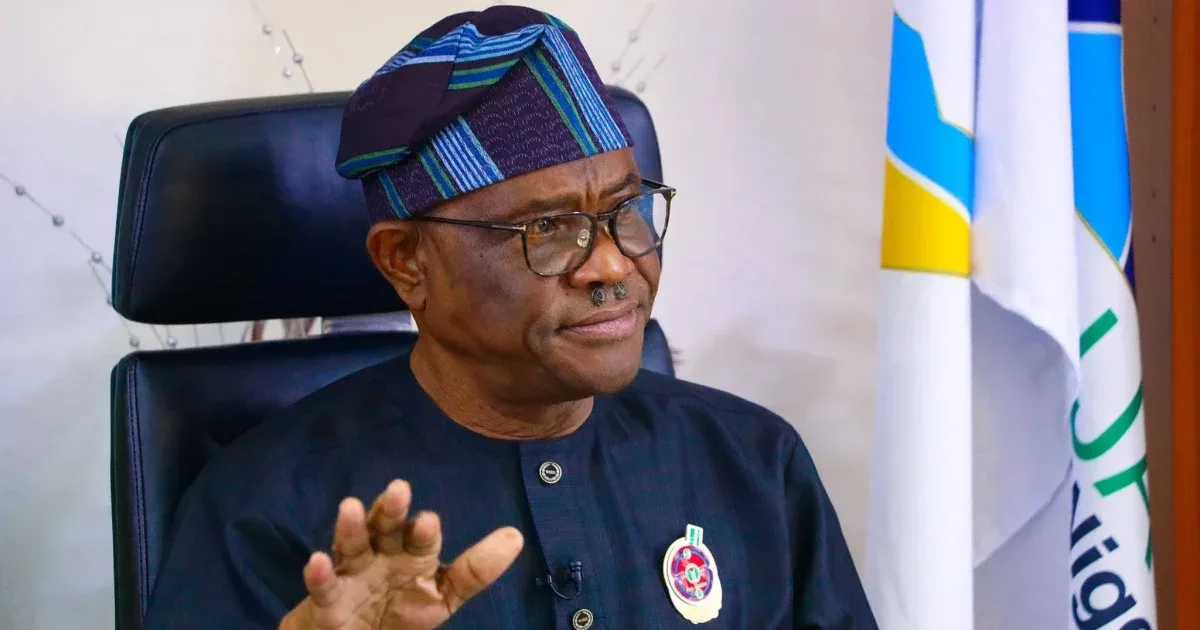
Speaking on the theme, “People, Politics and Power Play in Nigeria: The Agitation for Equity and Fairness,” the minister cautioned against politicians who exploit public grievances and concerns about marginalisation to advance personal or sectional interests.
He argued that Nigeria’s pursuit of fairness would remain incomplete if political debates focused mainly on which ethnic group or region occupied positions of authority without examining what those in power delivered to the people.
According to Wike, replacing one group with another in government does not automatically end injustice if the benefits of governance remain concentrated among a privileged few.
He maintained that genuine opposition to marginalisation requires consistency, insisting that people cannot credibly condemn exclusion when their own group is disadvantaged but remain silent when others experience similar treatment.
The FCT minister also warned against the misuse of public office for personal enrichment or sectional dominance, urging Nigerians to scrutinise the intentions and performance of political leaders rather than rely solely on campaign promises or appeals to identity.
Addressing the question of equitable representation, Wike acknowledged the importance of constitutional provisions such as the federal character principle, which is intended to promote national unity and prevent the domination of public institutions by a few states or groups.
However, he stressed that the pursuit of fair representation should not come at the expense of competence and effective leadership.
“A Nigerian should not be excluded from public office because of where he or she comes from; neither should competence become irrelevant once a candidate’s identity satisfies a representational expectation,” he said.
Wike argued that public office should be treated as a responsibility entrusted to leaders by citizens, rather than a privilege automatically owed to a particular individual, ethnic group or political interest.
He further maintained that Nigeria’s diversity should serve as a foundation for national unity and cooperation instead of becoming a source of division or exclusion.
The minister also challenged political leaders and citizens to measure inclusion by its practical impact on people's lives. He identified employment, quality education, healthcare, electricity, security, infrastructure and economic opportunities as essential indicators of meaningful participation in national development.
According to him, the appointment of a prominent individual from a particular community means little to ordinary residents if they continue to face unemployment, poor public services and economic hardship.
He noted that Nigeria had adopted several arrangements to accommodate its diversity, including federalism, state creation, revenue allocation, zoning and rotational presidency. However, he said these mechanisms alone could not guarantee fairness or improve citizens' living conditions without responsible leadership and effective governance.
Wike called for a political culture that places the common good above ethnic and sectional interests, giving every Nigerian a reasonable opportunity to participate in national life regardless of background.
His remarks come as political activities and conversations about leadership intensify ahead of the 2027 general elections, with questions of competence, representation, fairness and accountability remaining central to public debate.
The inaugural Idoma Hall of Fame induction ceremony formed part of the Idoma Centenary Plus celebration and was organised to recognise distinguished members of the Idoma community and preserve their contributions for future generations.
Wike's central message was that political inclusion must go beyond who occupies public office. For Nigerians, he argued, the real test of leadership lies in whether those entrusted with power can deliver fair opportunities, effective public services and tangible improvements in people's lives.
Reporting by TalkNaijaMedia




Reader Comments (0)
No comments yet. Be the first to share your perspective on this report.