

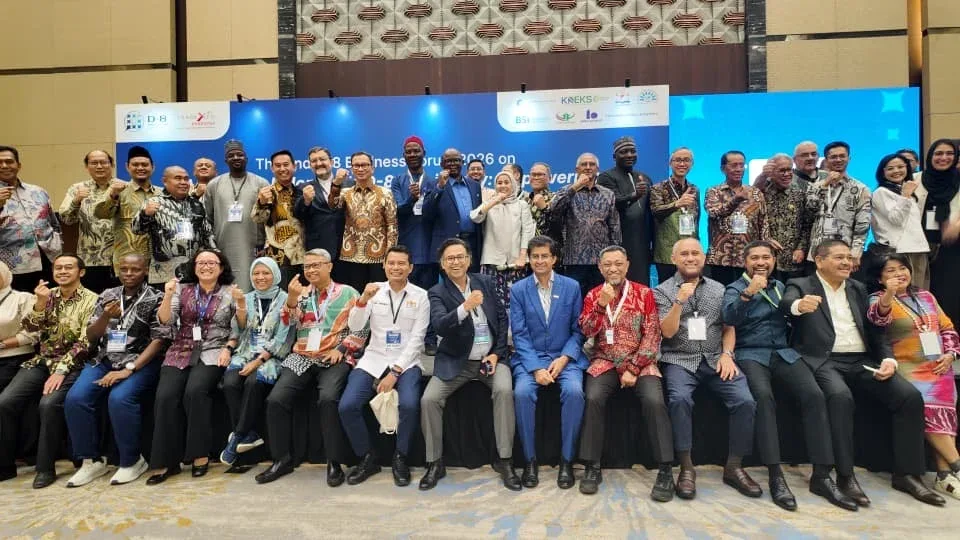
Mahmood said trade among D-8 economies stood at approximately $157 billion in 2024, stressing that greater cooperation would be needed to achieve the organisation’s 2030 ambition.
The forum took place alongside the 41st Trade Expo Indonesia under the theme, “Advancing Indonesia’s D-8 Presidency: Empowering Business Cooperation in Trade and Supply Chain.”
According to the secretary-general, the D-8 represents a substantial economic bloc spanning Asia, Africa and Europe, with a combined population of about 1.3 billion people and a gross domestic product exceeding $5 trillion.
He said the organisation’s population, natural resources, industrial capacity and entrepreneurial strength provided considerable opportunities for expanding trade and attracting investments across member states.
Mahmood explained that achieving the $500 billion target would require businesses to explore new markets, diversify their sources of raw materials and products, establish industrial partnerships and develop integrated regional supply chains.
He also stressed the importance of implementing the D-8 Preferential Trade Agreement, which is intended to reduce trade barriers and improve market access among participating countries.
The secretary-general called for more effective use of available trade preferences, wider product coverage and stronger engagement with exporters, importers and industry associations to ensure businesses benefit from the agreement.
He identified cumbersome customs procedures, non-tariff barriers, inadequate transport links, logistics challenges and restrictions affecting business mobility as some of the obstacles that must be addressed to accelerate trade and investment within the bloc.
Highlighting Nigeria’s contribution, Mahmood described the establishment of the D-8 Centre for Small and Medium Enterprises in Abuja in June 2025 as an important step towards strengthening entrepreneurship and supporting smaller businesses across member countries.
He said the centre could help entrepreneurs improve their business capacity, adopt innovative practices, gain access to new markets and participate more effectively in regional and international value chains.
Mahmood also called for closer cooperation between the Abuja-based centre, the D-8 Chambers of Commerce and Industry and the organisation’s secretariat.
According to him, stronger collaboration among these institutions could connect small businesses with larger companies, encourage joint ventures, strengthen supplier networks and create more opportunities for women and young entrepreneurs.
The secretary-general maintained that the private sector must remain at the heart of the D-8’s economic integration agenda. While governments could create supportive policies and regulatory frameworks, he said businesses were responsible for mobilising capital, driving innovation and generating economic value.
He identified textiles, automotive manufacturing, pharmaceuticals, agriculture, food processing, energy and digital technology as sectors offering opportunities for cross-border investments, technology transfer and industrial partnerships.
Mahmood urged member countries to move beyond simply exchanging finished goods and instead focus on jointly producing goods and services by linking manufacturers, suppliers, investors and technology partners.
As the organisation approaches its 30th anniversary in 2027, he said member countries should prioritise practical results, including increased trade, stronger business partnerships and more resilient supply chains.
Meanwhile, Nigerian business representatives at the forum raised concerns over the absence of a Nigerian government delegation, despite the presence of entrepreneurs and other private-sector representatives from the country.
Hassan Yaro, President of the Kano Council of Traders and Entrepreneurs and a council member of the Kano Chamber of Commerce, said more than 150 Nigerian entrepreneurs and business representatives had travelled to Indonesia to explore commercial partnerships and investment opportunities.
Yaro said the Nigerian business community remained committed to representing the country and establishing relationships with international partners, despite the reported absence of government officials.
He questioned why Nigeria did not have an official government delegation at the event, particularly when other D-8 member countries were represented.
Yaro also expressed concern about whether the resources invested in mobilising Nigerian entrepreneurs for international business forums were producing measurable results for the country’s economy.
He argued that participation in such events should lead to tangible benefits, including stronger commercial relationships, improved market access and new investment opportunities for Nigerian businesses.
However, Yaro acknowledged efforts by the administration of President Bola Tinubu to promote the halal economy, particularly initiatives associated with Vice-President Kashim Shettima.
He urged the federal government to pay greater attention to opportunities available to Nigerian entrepreneurs through the D-8 framework, especially in financing, halal industries and international business partnerships.
According to him, Nigerian entrepreneurs were willing to take advantage of the opportunities offered by the organisation but needed stronger institutional support and better coordination with relevant government agencies.
Yaro called on the government to ensure that qualified business representatives were included in future international delegations and that the relationships established at trade events translated into meaningful commercial outcomes.
He suggested that the Ministry of Industry, Trade and Investment and other relevant institutions should improve their planning and communication ahead of future forums.
He added that identifying active entrepreneurs whose businesses align with the objectives of each event would help Nigeria make better use of international trade platforms.


Reader Comments (0)
No comments yet. Be the first to share your perspective on this report.