

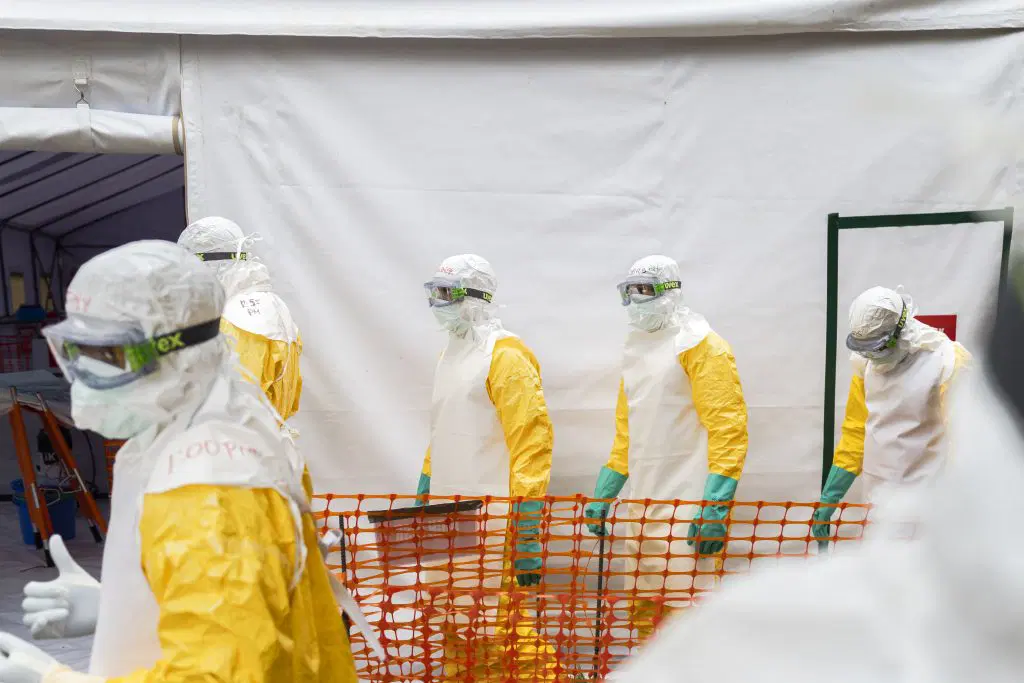
The Nigeria Centre for Disease Control and Prevention (NCDC) has identified 53 contacts linked to the country’s confirmed Ebola case and urged hospitals nationwide to isolate suspected cases immediately, without waiting for laboratory test results.
The agency’s directive comes after Nigeria confirmed an imported case of Ebola disease caused by the Bundibugyo virus in the Federal Capital Territory (FCT) on October 20, 2026.
NCDC Director-General, Dr Jide Idris, said early detection, prompt isolation and strict infection prevention measures were essential to limiting transmission and protecting healthcare workers.
According to the NCDC’s Ebola Disease Situation Report dated October 24, the patient is a 42-year-old woman who arrived in Nigeria from Uganda via Addis Ababa on October 3. She developed symptoms on October 7 and sought medical attention at a private health facility on October 10 before being admitted to another facility the following day.
The agency was notified on October 19, and laboratory tests confirmed the infection on October 20. The symptoms reported included fever, diarrhoea, general body aches and a sore throat. The report said no bleeding was recorded in the case details.
The patient was receiving treatment in isolation and had reportedly improved significantly, according to the situation report.
The 53 identified contacts include healthcare workers, domestic staff and the patient’s spouse, alongside others linked to her care and possible exposure. Public health teams have categorised the contacts and are monitoring them for 21 days after their last possible exposure.
Idris urged hospitals to separate suspected Ebola patients from others as soon as possible and notify the relevant public health authorities. He stressed that infection prevention precautions must begin before laboratory confirmation where Ebola is suspected.
He also called on healthcare facilities to maintain effective screening and triage procedures, practise proper hand hygiene, ensure safe handling of sharps and medical waste, clean environments appropriately and use suitable personal protective equipment.
The NCDC has activated its national incident management system at the highest level to coordinate the response, working with the Federal Ministry of Health and Social Welfare, FCT health authorities and other partners. Response activities include contact tracing, laboratory investigations, surveillance, infection prevention and public communication.
In a related development, a suspected Ebola case reported in Rivers State on October 23 tested negative, according to the October 24 situation report. The result did not add another confirmed case to Nigeria’s outbreak count.
The agency has also urged members of the public to cooperate with contact-tracing teams and avoid stigmatising people identified as contacts. Being listed as a contact does not mean that a person has contracted Ebola.
Genomic sequencing of the confirmed case was completed by the NCDC’s National Reference Laboratory and the African Centre of Excellence for Genomics of Infectious Diseases as part of ongoing investigations.
Nigeria’s response remains focused on identifying possible exposures, monitoring contacts, protecting health workers and ensuring suspected cases are reported and managed without delay. Health authorities continue to stress that timely reporting and cooperation are important to preventing further transmission.
Reporting by TalkNaijaMedia




Reader Comments (0)
No comments yet. Be the first to share your perspective on this report.