
The Federal Government has called for deeper private-sector investment across Nigeria’s midstream and downstream petroleum industry, stressing that increased crude oil production will have limited economic impact without corresponding investment in refining, gas processing, pipelines, storage, transportation and other supporting infrastructure.
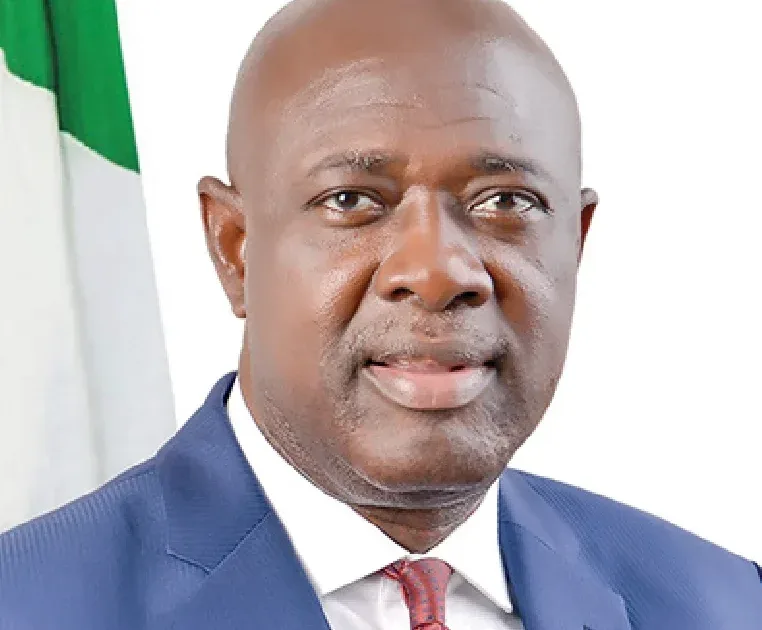
Minister of State for Petroleum Resources (Oil), Heineken Lokpobiri, made the call at the inaugural 2026 Petroleum Technology Development Fund Journal Summit in Abuja, where stakeholders examined the prospects and challenges of private-sector participation in the country’s midstream and downstream petroleum sectors.
The summit, organised around the theme, “Private Sector Participation in Nigeria’s Midstream and Downstream Petroleum Sector: Prospects, Challenges and the Way Forward,” brought together government officials, industry operators, researchers, academics and other stakeholders to discuss ways of attracting capital and turning Nigeria’s petroleum resources into broader economic opportunities.
Represented by his Technical Adviser, Emmanuel Sinime, Lokpobiri said recent developments in the upstream sector showed that Nigeria’s petroleum industry was recording improvements in production and drilling activity. According to figures presented at the summit, crude production had risen from about one million barrels per day in 2023 to more than 1.7 million barrels per day, while the number of active drilling rigs had increased from roughly 14 to more than 60.
The minister said the Federal Government’s ongoing petroleum-sector reforms were intended to improve regulatory certainty, restore investor confidence and create a more predictable environment for private capital.
He stressed, however, that higher crude production alone could not deliver the desired transformation if Nigeria lacked sufficient infrastructure to move, process, store and distribute petroleum products efficiently.
According to him, the expansion of private refining capacity, including the emergence of the Dangote Petroleum Refinery and the development of modular refineries, demonstrates the role private investment can play in changing the structure of the downstream petroleum market.
Lokpobiri argued that increased production needed to be supported by efficient transportation and storage systems, greater refining capacity and a competitive market capable of delivering value to both consumers and investors.
The minister also pointed to efforts by the Nigerian Midstream and Downstream Petroleum Regulatory Authority to improve the operating environment, including measures relating to domestic gas pricing, competition and access to critical infrastructure such as pipelines, depots and terminals.
Despite the opportunities, he acknowledged that investors still face challenges including infrastructure deficits, high logistics costs, financing difficulties, regulatory uncertainty and market volatility.
The Federal Government’s position is that regulations should ultimately translate into tangible economic activity, rather than simply increase the volume of rules and guidelines issued by government agencies.
The Minister of State for Petroleum Resources (Gas), Ekperikpe Ekpo, similarly stressed the importance of private capital in unlocking Nigeria’s extensive gas resources.
Ekpo said the Petroleum Industry Act had provided a framework for greater regulatory certainty, while the Federal Government’s Decade of Gas initiative was designed to expand the use of natural gas for industrialisation, job creation, energy security and economic diversification.
He identified gas processing, transportation and distribution, liquefied petroleum gas, compressed natural gas and petrochemicals among the areas requiring significant investment.
The minister maintained that government could not finance the required projects alone and called for stronger partnerships involving private investors, financial institutions, technology providers, research institutions and other stakeholders.
He also identified high financing costs, infrastructure shortages, project-development risks, regulatory bottlenecks and limited access to reliable energy infrastructure as issues that must be addressed to make investment projects more commercially attractive.
The Executive Secretary of PTDF, Prof. Shuaibu Aliyu, said the summit was intended to take conversations about petroleum-sector research beyond academic publications and towards practical solutions for the industry.
PTDF’s Intervention Repository currently records 15,639 sponsored scholars and 1,767 research items, reflecting the Fund’s continuing role in human-capital development and petroleum-related research.
Aliyu said PTDF wanted research findings to move further into practical application, intellectual-property development and commercialisation, while encouraging stronger links between researchers and industry operators.
He noted that private investment in refining, gas processing, logistics, storage and petroleum-product distribution could create opportunities for economic growth, employment, technology development and local capacity building.
In his keynote address, Waltersmith Petroman Oil Limited Managing Director, Oladapo Filani, said Nigeria’s human-capital challenge was no longer simply about producing skilled professionals. He argued that the country also needed to retain expertise and create opportunities for Nigerians to apply their knowledge in ways that generate technology, businesses and economic value.
Filani identified infrastructure, financing, commercial viability, investment uncertainty and human-capital gaps as interconnected challenges affecting the development of the midstream and downstream sectors.
He said Nigeria would require engineers, project managers, process specialists and commercial professionals capable of managing increasingly sophisticated refineries, gas-processing facilities, pipelines and other energy infrastructure.
For private investors, he said, the availability of oil and gas resources must be matched by an investment environment capable of providing predictable and competitive returns.
Filani also advocated the development of shared infrastructure, including pipelines, gas-processing facilities, storage, power and logistics networks that could serve multiple operators and industries.
The argument is that such an integrated approach could reduce infrastructure constraints, improve project economics, expand market access and create additional value across the petroleum value chain.
The summit ultimately placed private investment, infrastructure development, research commercialisation and human-capital development at the centre of discussions about the next phase of Nigeria’s petroleum industry.
With crude production rising, the challenge now extends beyond extracting more oil and gas to building the infrastructure and industrial capacity required to process resources locally, move them efficiently and generate wider economic benefits.
Reporting by TalkNaijaMedia


Reader Comments (0)
No comments yet. Be the first to share your perspective on this report.