

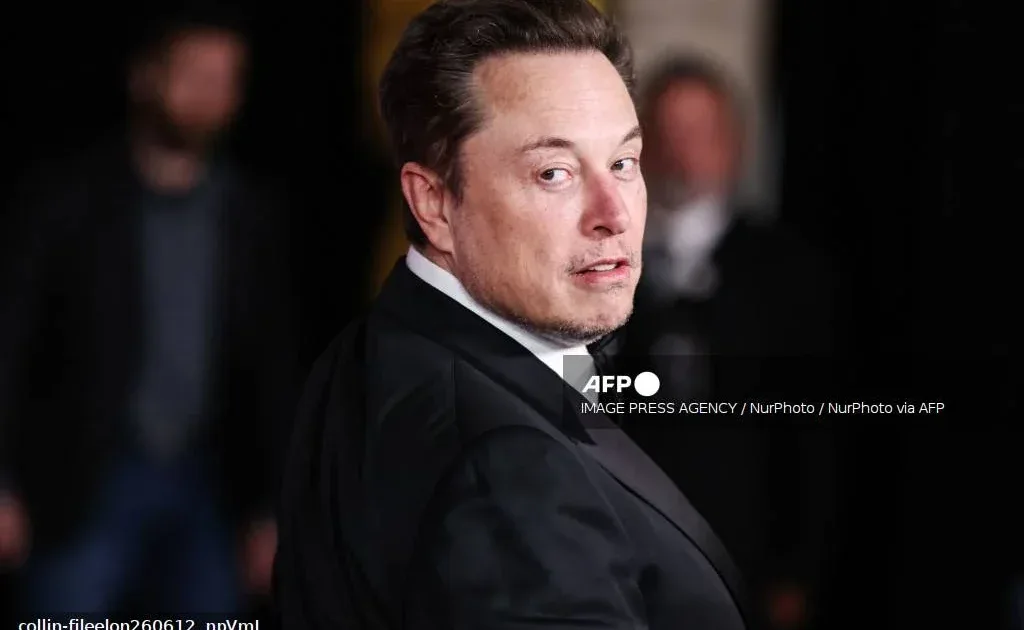
Although the demonstration attracted attention, it did not establish that the Roadster could operate as a conventional aircraft or sustain long-distance flight. The project nevertheless reflects Musk’s long-standing interest in pushing technological boundaries, often through companies he founded, co-founded, financed or leads.
Musk’s business journey began with internet services before expanding into transportation, aerospace, energy, communications and artificial intelligence. While he has played a prominent role in these ventures, the technologies involved are the result of work by engineers, researchers and other professionals, rather than the efforts of one individual alone.
His first major business success came with Zip2, an online city guide and mapping service he co-founded with his brother, Kimbal Musk, in 1995. The company helped newspapers provide digital business directories and location information when internet services were still gaining popularity. Compaq acquired Zip2 in 1999 in a deal valued at approximately $307 million.
Following the sale, Musk founded X.com in 1999 as an online financial services company. X.com later merged with Confinity, whose products included an online payment service, and the combined business became PayPal. eBay acquired PayPal in 2002 in a stock transaction valued at approximately $1.5 billion. Musk was one of the company’s major shareholders, and the proceeds helped finance his subsequent ventures.
In 2002, Musk founded SpaceX with the goal of reducing the cost of space transportation. The company became known for developing reusable rocket systems, particularly Falcon 9 boosters that can return to Earth and be used again after launch. SpaceX also developed the Dragon spacecraft for cargo and crew missions and has continued work on Starship, a system intended for future space missions, including journeys to the Moon and Mars.
Tesla is another major part of Musk’s business portfolio. He invested in the electric vehicle company in 2004 and became its chief executive in 2008. Tesla’s original Roadster reached customers in 2008, followed by vehicles including the Model S, Model X, Model 3 and Model Y.
Tesla did not invent the electric car, which existed long before the company was established. Its influence has instead come from developing and commercialising electric vehicles, battery technology, charging infrastructure and driver-assistance systems on a large scale. The company has also expanded into energy storage for homes, businesses and electricity networks.
Through SpaceX, Musk has also overseen the development of Starlink, a satellite internet service designed to provide broadband connectivity in locations where conventional networks are limited or difficult to deploy. The system uses satellites in low Earth orbit and user terminals to connect customers to the internet.
Another venture is Neuralink, which Musk co-founded in 2016. The company is developing brain-computer interface technology intended to interpret neural signals and enable users to control digital devices. One of its stated goals is to help people with paralysis interact with computers. The technology remains an area of medical and scientific development, with important questions surrounding safety, clinical effectiveness, privacy and long-term outcomes.
Musk also founded The Boring Company to develop tunnels and underground transportation systems as a potential response to urban traffic congestion. One of its projects is the Vegas Loop in Las Vegas, which uses tunnels and vehicles to transport passengers between destinations. The approach offers an alternative route for moving people but has not eliminated the broader challenges associated with urban transport.
In artificial intelligence, Musk founded xAI in 2023. The company developed Grok, an AI assistant associated with the social media platform X. Its work places Musk among business leaders competing to develop systems that can answer questions, analyse information, generate content and assist users with digital tasks.
The redesigned Roadster represents the latest addition to this collection of ventures. Its rocket-inspired thrusters and brief airborne demonstration have renewed discussion about the possibility of flying cars, although practical questions remain about safety, regulation, cost and whether the demonstrated capabilities will be available in production vehicles.
From online directories and digital payments to rockets, electric vehicles and artificial intelligence, Musk’s career has involved backing and developing technologies across several industries. The results have varied by project, but his businesses continue to attract attention because of their scale, ambition and potential impact on how people live and work.
Reporting by TalkNaija Media


Reader Comments (0)
No comments yet. Be the first to share your perspective on this report.