

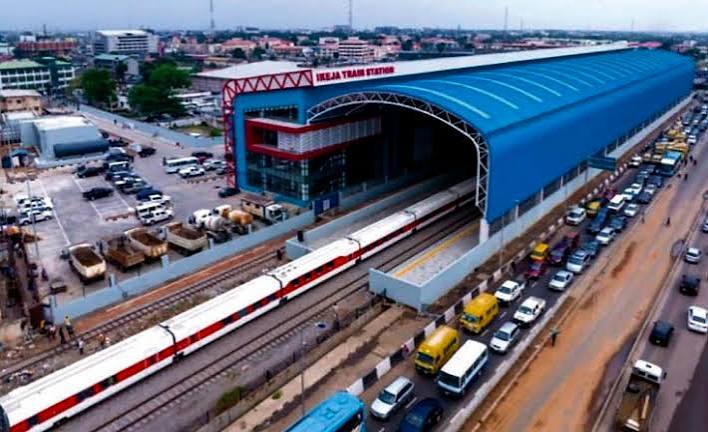
The proposed project is expected to reduce dependence on road transport and provide an alternative for passengers navigating Lagos traffic to catch their flights.
The Managing Director of the Federal Airports Authority of Nigeria (FAAN), Olubunmi Onabanjo-Kuku, has also disclosed that the planned extension could have five stops within the airport area. The proposed locations include Terminal 1, Terminal 2, the Hadron Cargo area, airport administrative offices and an area around Bisam.
However, while the proposal has raised hopes of easier airport access, questions remain about how convenient the service would be for passengers who live far from the existing rail corridor or travel with multiple pieces of luggage.
Transport researcher Adejumo John said the project’s effectiveness would depend largely on how well it connects with other transport options across Lagos.
He noted that residents of areas such as Lekki, Ajah, Festac and parts of Surulere might still face considerable difficulties reaching a suitable rail station before continuing their journeys to the airport.
According to him, first-mile and last-mile transport connections could determine whether passengers embrace the proposed service or continue relying on private cars and ride-hailing services.
John explained that passengers could be discouraged from using the train if reaching a station involves spending considerable time in traffic or if there are no secure facilities where motorists can park their vehicles before boarding.
For travellers who live close to the rail corridor, however, the extension could provide a useful alternative to road transport, particularly during periods of heavy traffic.
One passenger, Azubuike Uchenna, said difficulties getting to the airport had previously forced him to lodge close to the facility before a flight, despite leaving home as early as three hours before departure.
Uchenna welcomed the proposed rail connection but questioned how much relief it would offer people living in more distant parts of Lagos, including the Island, Festac and Ojo.
He said the project could be particularly beneficial to passengers whose homes are close to the rail route, while those living farther away might still need to make additional transport arrangements before boarding the train.
Another traveller, Joy Odinaka, said she currently spends between ₦8,000 and ₦10,000 on a cab journey to the airport, with the trip sometimes taking as long as three hours.
Despite the expense and delays, she said travelling directly by car remained more convenient for her than using a train, particularly when carrying luggage.
Odinaka raised concerns about the difficulties passengers might encounter while moving bags between their homes, rail stations and airport terminals.
Her concerns highlight a practical challenge the project will need to address if it is to attract passengers who prioritise convenience and a direct journey to the airport.
The Lagos Red Line is a 37-kilometre rail corridor designed to connect Agbado with other parts of Lagos. Its first operational phase runs between Agbado and Oyingbo, with stations serving areas including Iju, Agege, Ikeja, Oshodi, Mushin and Yaba.
The proposed airport extension would build on the existing network, potentially allowing passengers to travel closer to the airport without depending entirely on road transport.
John said one of the biggest benefits of the proposed service could be the predictability of travel time. At present, journeys to the airport can be affected by congestion along major routes, including the Ikeja and airport road corridors.
He recommended that the government integrate feeder buses with the rail service, provide secure park-and-ride facilities and establish organised pick-up and drop-off points for ride-hailing operators.
Such arrangements, he said, could make the service more accessible to passengers who live outside walking distance of the stations.
John also stressed the importance of reliable train schedules, suggesting that services operating at intervals of about 15 to 20 minutes could give passengers greater confidence in using the system.
He warned that infrequent or unreliable trains could discourage travellers from depending on the rail for time-sensitive journeys, especially when catching international flights.
Affordable fares would also be important in determining whether passengers choose the train over taxis, ride-hailing services or private vehicles.
Ultimately, the proposed Lagos airport rail link could improve access to one of Nigeria’s busiest aviation gateways. However, its impact will depend not only on the railway infrastructure but also on how easily passengers can reach stations, manage their luggage and complete the final leg of their journeys.
The project’s eventual travel times, fares, operating frequency and connections with other transport services will be crucial in determining whether it becomes a preferred option for airport users.
Reporting by TalkNaijaMedia




Reader Comments (0)
No comments yet. Be the first to share your perspective on this report.