

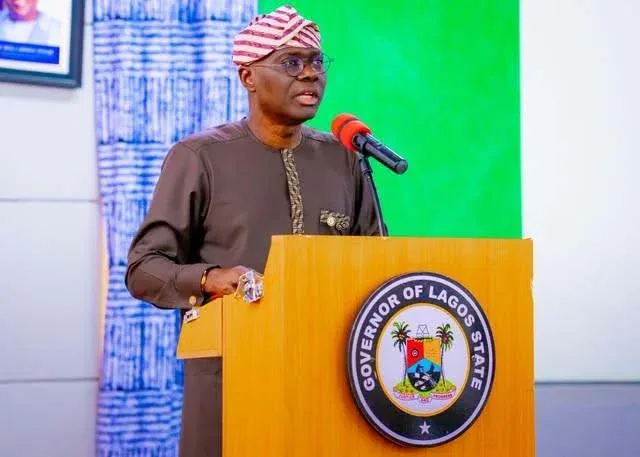
The event, held at the Blue Roof of the Lagos Television Complex in Agidingbi, Ikeja, was organised by the Office of Physical Planning under the Lagos State Ministry of Physical Planning and Urban Development. This year’s global theme was “Adequate Housing for All.”
Sanwo-Olu, who was represented by the Commissioner for Housing, Moruf Akinderu-Fatai, said the scale of the housing deficit required more than simply increasing the number of buildings constructed across the state.
He noted that adequate housing must be affordable, safe and supported by essential services, including roads, drainage, electricity and water. According to him, homes should also be located within communities that provide residents with security, dignity and access to opportunities.
The governor disclosed that his administration had delivered 10,623 homes over seven years, comprising 4,414 units funded directly through the state budget and another 6,209 developed through public-private partnerships.
He added that 23 housing estates had been completed across Lagos’ five divisions since 2019, while acknowledging that the achievements represented only part of the work required to address the state’s housing shortage.
Sanwo-Olu also highlighted government initiatives designed to make homeownership more accessible. Under the Rent-to-Own scheme, eligible first-time buyers can take possession of a property after paying an initial five per cent deposit and repay the balance over a period of 10 years.
The Lagos Home Ownership Mortgage Scheme, known as Lagos HOMS, also provides a route to homeownership through an equity contribution and repayment arrangements spread over 10 years, according to the governor.
He said more than 20,000 residents had benefited from mortgage and rent-to-own schemes over the past 12 years.
Beyond housing construction, the governor stressed the importance of developing functional communities with the infrastructure needed to support residents. He cited the Greater Lagos Apartments in Surulere as an example of efforts to transform previously underutilised land into residential accommodation.
He also referred to housing developments at Egan-Igando, Ajara and Abraham Adesanya, including projects that had experienced delays before being completed or revived.
According to him, five housing schemes being developed through direct budgetary funding are expected to provide an additional 1,584 homes. Work has also commenced on the Ajara Phase II high-rise housing project.
On the rights of tenants, Sanwo-Olu said the government recognised that homeownership was not a realistic option for every resident and that people who rent properties also required adequate protection.
He pointed to the proposed Tenancy and Recovery of Premises Bill before the Lagos State House of Assembly, which is intended to address issues including arbitrary rent increases, unlawful charges, estate agency practices and delays in resolving tenancy disputes.
Proposals for monthly and quarterly rent payments are also being considered, according to the governor.
Earlier, the Commissioner for Physical Planning and Urban Development, Oluyinka Olumide, said the housing challenge in Lagos was closely linked to transportation, employment, security, healthcare, education, water supply and sanitation.
He explained that rapid population growth continued to put pressure on land, housing and public infrastructure, making effective physical planning essential to sustainable urban development.
Olumide said government and private developers needed to consider not only the number of homes being built but also their locations, accessibility and the quality of the surrounding environment.
He also highlighted the Electronic Physical Planning Permit Processing System as part of efforts to improve the efficiency and transparency of development approval processes.
The commissioner called for stronger cooperation among government agencies, property developers, financial institutions, professional bodies, community leaders and residents, noting that the housing deficit could not be resolved by government alone.
The Permanent Secretary in the Office of Physical Planning, Olayinka Wasiu, commended the state government and other stakeholders for their contributions to housing and urban development initiatives.
The celebration also featured discussions involving professionals in the built environment, development partners, academics, community representatives and private-sector participants. Guest speaker Festus Adebayo shared perspectives on practical and sustainable ways to improve access to decent housing.
Students from selected schools also participated in a debate on housing and urban development, highlighting the importance of involving young people in conversations about the future of Lagos.
World Habitat Day is observed on the first Monday of October each year under the United Nations Human Settlements Programme (UN-Habitat). The annual event draws attention to housing conditions and the need to make adequate shelter accessible to everyone.
The Lagos celebration ended with a renewed call for government institutions, developers, financial organisations and communities to work together towards a more affordable, inclusive and well-planned state.
Reporting by TalkNaijaMedia



Reader Comments (0)
No comments yet. Be the first to share your perspective on this report.