


Agbaje Lateef, a professor in LAUTECH’s Department of Pure and Applied Biology and head of NANO+, said the gathering would bring researchers, policymakers, industry representatives and other stakeholders together to explore how nanotechnology research could translate into practical solutions and economic opportunities for Nigeria.
He explained that the conference would build on previous editions by encouraging stronger links between laboratory research and real-world applications, particularly in areas such as agriculture, healthcare, engineering, environmental protection, food and nutrition, water treatment and renewable energy.
According to the organisers, the event is also intended to address barriers that prevent research findings from reaching the market, including limited funding, intellectual property protection and the commercial development of new technologies.
The conference is expected to be opened by the Minister of Innovation, Science and Technology, Kingsley Tochukwu Udeh, on Wednesday, November 25, according to the programme outlined by the organisers.
Martins Emeje, Director-General of the Nigeria Natural Medicine Development Agency, is listed as the keynote speaker, while LAUTECH Vice-Chancellor Razaq O. Rom Kalilu is expected to chair the occasion. Khalil Suleiman Halilu, Executive Vice-Chairman and Director-General of the National Agency for Science and Engineering Infrastructure, is also listed among the special guests.
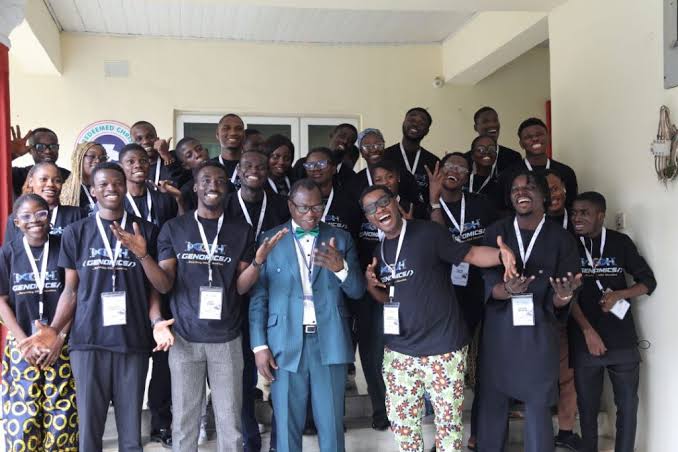
A major component of the programme is a practical workshop designed for postgraduate students and early-career researchers. The training will cover the synthesis, characterisation and applications of nanoparticles, with an emphasis on techniques that can support further research and technological development.
Lateef said the group’s annual training activities had benefited more than 600 early-career scholars over the past decade, with participants drawn from more than 50 institutions across Nigeria. He noted that researchers had applied nanotechnology in fields ranging from agriculture and medicine to engineering, environmental science and renewable energy.
The 10th edition will also include an essay competition for students from selected secondary schools in Ogbomoso. The activity is intended to introduce younger learners to nanotechnology and encourage interest in scientific research.
Organisers are also planning an awards ceremony to recognise individuals, agencies and organisations that have supported the group’s nanotechnology research and development activities since its establishment in 2014.
NANO+ says its work has contributed to the development of nanotechnology research in Nigeria through scientific publications, patented innovations and the exploration of nano-based products for industrial, agricultural, healthcare and environmental applications.
The group also publishes Nano Plus: Science and Technology of Nanomaterials, an open-access journal dedicated to research on nanomaterials and their applications.
As the conference approaches, its organisers are seeking to strengthen collaboration between researchers, institutions and industry, with the broader goal of helping Nigerian scientific discoveries move beyond academic publication towards practical use and commercial value.
Reporting by TalkNaijaMedia



Reader Comments (0)
No comments yet. Be the first to share your perspective on this report.