

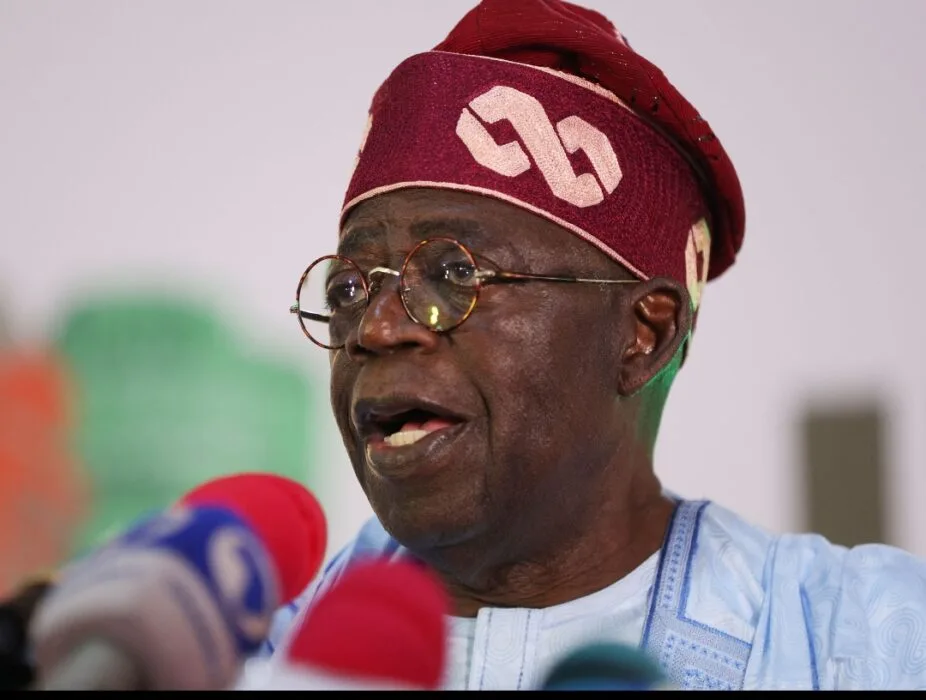
Nigeria’s 66th Independence anniversary provides another opportunity to look beyond headline economic figures and ask a more fundamental question: how much of the country’s enormous economic potential has been converted into sustainable prosperity for its citizens?
Over six decades after independence, Nigeria remains one of Africa’s largest economies and possesses substantial natural resources, a large consumer market, a growing technology ecosystem and considerable human capital. Yet the country continues to wrestle with problems that limit the impact of that potential, including unreliable electricity, high business costs, infrastructure gaps, limited industrial capacity, transport bottlenecks and difficulties accessing affordable finance.
That tension is at the heart of the “growth without transformation” debate.
Available economic data show that Nigeria’s economy has expanded considerably in nominal terms over the decades. World Bank data put Nigeria’s gross domestic product at about $290.79 billion in 2025, compared with $668.22 billion at its 2019 nominal-dollar peak. The World Bank also recorded real GDP growth of 4.0 per cent in 2025.
The figures demonstrate the size of the Nigerian economy, but GDP alone does not reveal whether growth is creating enough productive capacity, lowering the cost of doing business or improving living standards across the population.
For Nigeria, the next stage of economic development therefore depends increasingly on what happens between economic growth and real transformation.
One of the clearest examples is the financial sector. Nigerian banks have been raising fresh capital under the Central Bank of Nigeria’s recapitalisation programme, strengthening the capacity of financial institutions to support businesses and investment. The broader objective is not simply to create larger banks, but to ensure that the financial system can provide more sustainable funding for productive sectors of the economy.
Digital finance has also changed the way Nigerians transact. The rapid expansion of instant payments, mobile banking and digital wallets has created an increasingly cashless ecosystem and opened new possibilities for small businesses and consumers. The challenge now is to ensure that digital financial growth translates into easier access to affordable credit and greater participation in the formal economy.
Nigeria’s electricity sector, however, illustrates why infrastructure remains central to the transformation question.
The Nigerian Electricity Regulatory Commission reported that an average of 4,758 megawatts of generation capacity was available for dispatch in August 2026, while average utilisation stood at 4,102MW.
The difference between installed or available capacity and the electricity actually delivered to consumers remains an important part of the country's power challenge. For manufacturers, small businesses and households, unreliable electricity increases operating costs and reduces productivity.
Metering is another part of the reform process. NERC reported that the national metering rate reached 61.51 per cent by the end of June 2026, up from 60.22 per cent in May.
The figures point to progress, but they also underline the scale of the remaining work. A transformed electricity sector requires not only more generation, but also dependable transmission, distribution, metering, investment and commercially sustainable utilities.
The oil and gas industry presents a similar contradiction.
Nigeria remains a major hydrocarbon producer, and recent production figures show improvement. The Nigerian Upstream Petroleum Regulatory Commission reported average crude oil and condensate production of 1.678 million barrels per day in August 2026, while crude oil alone averaged about 1.50 million barrels per day.
The country also retains enormous reserves. NUPRC puts Nigeria’s crude oil and condensate reserves at 37.01 billion barrels and its gas reserves at 215.19 trillion cubic feet.
The bigger question is how much value Nigeria captures from those resources.
For decades, crude oil has generated foreign exchange and government revenue, but the country has struggled to build a sufficiently deep domestic industrial ecosystem around petroleum. Refining, petrochemicals, gas processing, manufacturing, logistics and other industries connected to the energy sector are therefore critical to determining whether higher production ultimately produces broader economic transformation.
Nigeria’s push to expand domestic gas utilisation is particularly significant. Projects such as NLNG’s Train 7 are designed to increase liquefied natural gas production capacity from 22 million tonnes per annum to 30 million tonnes. NLNG says the project is more than 80 per cent complete and is expected to strengthen local content, employment and Nigeria’s position in the global LNG market.
But higher oil and gas production cannot by itself guarantee lower prices or widespread prosperity. The real economic impact depends on investment, infrastructure, market conditions, domestic processing and how effectively energy revenues are converted into productive assets.
Manufacturing remains another major test.
Nigeria has a large domestic market, but manufacturers continue to contend with energy costs, transportation expenses, foreign-exchange pressures, taxation, financing constraints and weaknesses in local supply chains. These pressures make it difficult for many businesses to compete with imported goods or expand production at the scale required to create large numbers of jobs.
For small and medium-sized enterprises, the challenge can be even more immediate. Many businesses operate with limited access to long-term finance while facing high costs for electricity, logistics, raw materials and other inputs.
This is why economic transformation cannot be measured only by the size of the national economy. It must also be assessed by the number of viable businesses being created, the productivity of existing firms, the strength of local supply chains and the ability of Nigerian companies to compete beyond the domestic market.
Agriculture provides another important measure.
Nigeria has enormous agricultural potential, yet farmers continue to face challenges involving insecurity, access to quality inputs, financing, storage, transportation, irrigation, processing and market access. The objective should increasingly move beyond simply producing more raw commodities to developing stronger value chains that allow farmers and processors to capture more value.
The same principle applies to Nigeria’s mineral resources. Instead of exporting raw materials with limited domestic processing, industrial policy can focus on developing processing, manufacturing and related services around those resources.
Transportation is another missing link.
Nigeria has invested in roads, rail and airports over the years, but the effectiveness of those investments depends on how well different modes connect with one another. An efficient transport network should make it cheaper and faster to move agricultural produce, industrial goods, people and exports across the country.
Maritime infrastructure also remains crucial. With its long Atlantic coastline and extensive waterways, Nigeria has significant potential in shipping, ports, logistics and the wider blue economy. Unlocking that potential requires consistent investment, stronger regulation, improved port efficiency and greater participation by indigenous businesses.
Aviation faces a related challenge. Nigeria has a sizeable domestic market and a substantial network of airports, yet Nigerian airlines have historically struggled to achieve the international reach enjoyed by major foreign carriers. Building a globally competitive aviation industry requires capital, fleet expansion, maintenance capacity, training, infrastructure and an operating environment capable of supporting long-term investment.
Telecommunications, by contrast, represents one of the areas where Nigeria has experienced dramatic expansion.
Nigerian Communications Commission data show that active GSM subscriptions reached about 157.27 million in July 2026, while broadband subscriptions stood at approximately 124.42 million.
The growth of telecommunications has transformed banking, commerce, education, entertainment, media and social interaction. Yet even this sector faces challenges, including fibre cuts, vandalism, energy costs, right-of-way issues and the need to maintain service quality as demand grows.
The lesson is important: infrastructure expansion creates opportunity, but the economic benefit becomes much greater when infrastructure is reliable enough to support productive activity.
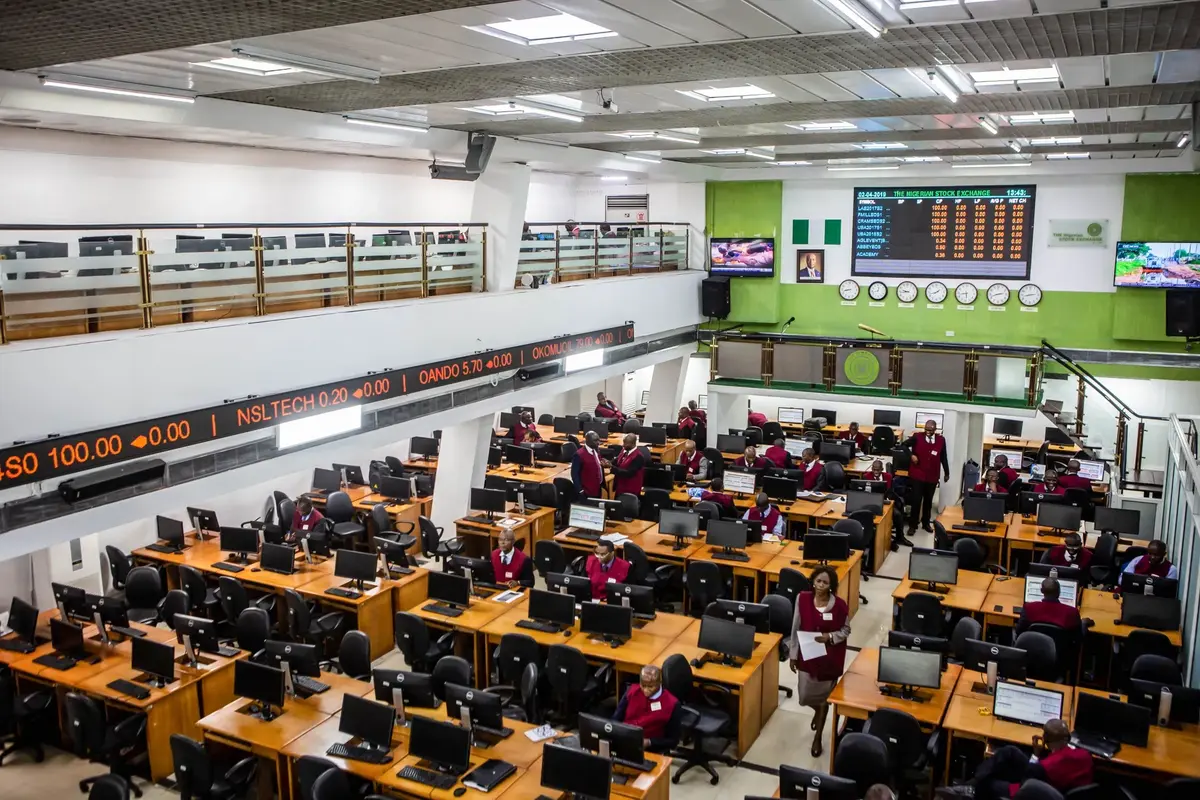
Nigeria’s capital market also reflects a more developed financial system than existed at independence. The market now provides companies and governments with avenues for raising capital while offering investors opportunities across equities and fixed-income instruments.
Yet deeper capital-market development will depend on more companies accessing the market, stronger investor participation, improved corporate governance and greater confidence in the long-term economic environment.
At 66, therefore, Nigeria’s economic story is neither simply one of failure nor one of success. It is a story of considerable expansion alongside persistent structural constraints.
The country has built banks, telecommunications networks, universities, airports, highways, industrial facilities, refineries and digital platforms. It has expanded its financial and technological ecosystems and remains endowed with substantial oil, gas, agricultural and human resources.
The unfinished task is connecting those assets into a productive economic system.
That means electricity that businesses can depend on, roads and rail that reduce logistics costs, ports that facilitate trade, affordable long-term finance, predictable policies, efficient public institutions, stronger local supply chains and an education system capable of producing workers with skills that match the economy of the future.
It also means moving from an economy that frequently exports raw materials toward one that processes more of what it produces.
For ordinary Nigerians, the ultimate test of economic transformation is not the size of GDP alone. It is whether businesses can survive and expand, whether young people can find productive work, whether farmers can earn more from their output, whether manufacturers can compete, whether transport and energy costs fall, and whether families experience improvements in their standard of living.
Nigeria’s 66th year of independence therefore arrives at an important point in the country’s economic journey.
The resources are considerable. The market is large. The entrepreneurial energy is visible. The infrastructure base is expanding in several areas.
What remains is the harder work of turning these advantages into a productive, competitive and inclusive economy.
For Nigeria, the journey from economic growth to genuine transformation will ultimately be measured not simply by how much the economy produces, but by how effectively that production creates opportunity, strengthens industries and improves the lives of its people.
Reporting by TalkNaijaMedia


Reader Comments (0)
No comments yet. Be the first to share your perspective on this report.