

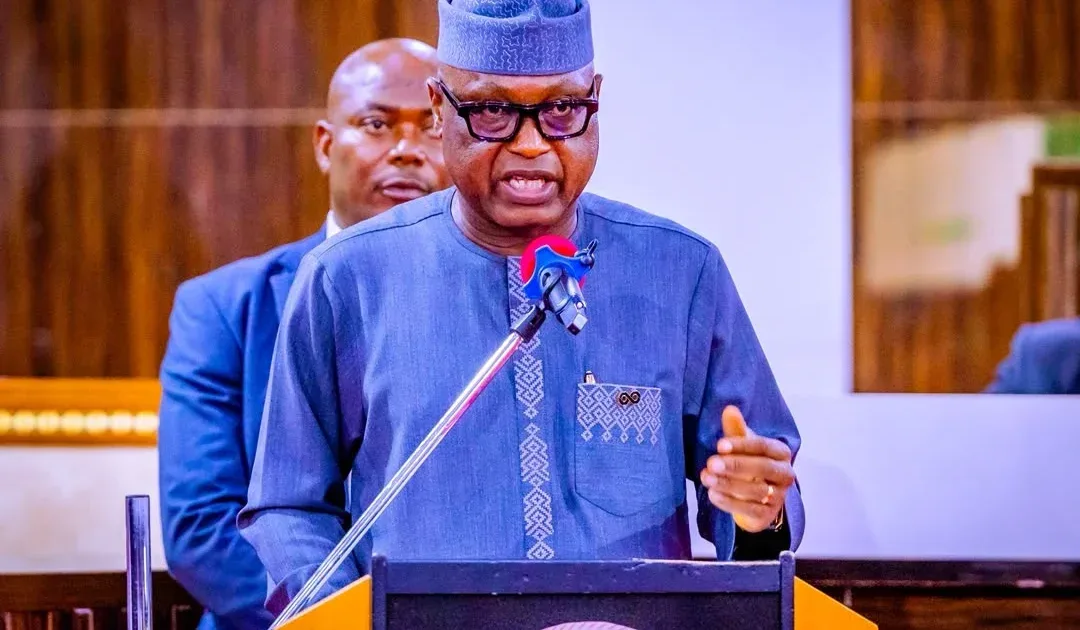
According to him, the administration intends to encourage more local processing of agricultural produce so that farmers and businesses can earn greater value from products grown in the state. He also identified access to affordable funding as a priority for small-scale entrepreneurs, including welders, tailors, hairdressers, barbers and other operators of micro and small businesses.
Oyebanji said the government would work to create a more attractive environment for investors and strengthen links between farmers and businesses capable of purchasing and processing their produce. He argued that reliable markets and local processing facilities would help increase productivity and create more economic opportunities.
The governor stressed that the renewed emphasis on industrialisation would not mean abandoning infrastructure development. Rather, he said the state would continue to address road and other infrastructure needs while giving greater attention to projects capable of expanding economic activity.
He disclosed that his administration was reactivating work on nearly 80 kilometres of township roads, while also developing a broader road-connectivity plan to accommodate the continued expansion of Ado-Ekiti and other communities.
Oyebanji also outlined plans to improve the operations of the Ekiti Agro-Allied International Cargo Airport, saying the government wanted the facility to operate for longer hours and handle aircraft more reliably during adverse weather conditions.
He said an Instrument Landing System had been installed and that a certification team was assessing it. The system is designed to assist aircraft approaches and landings, particularly when visibility is reduced, although its installation alone does not establish that all necessary approvals for the proposed operating arrangements have been completed.
On water supply, the governor said his administration would pursue a programme to address distribution challenges, including replacing ageing pipes. He added that community water consumers’ committees had been established to support better management of water services.
Oyebanji said the central objective of his second term was to build a more productive state economy, with government investments delivering tangible benefits to farmers, entrepreneurs and households. He said the administration’s proposed 2027 budget reflected this emphasis on productivity and economic development.
Reporting by TalkNaija Media



Reader Comments (0)
No comments yet. Be the first to share your perspective on this report.