

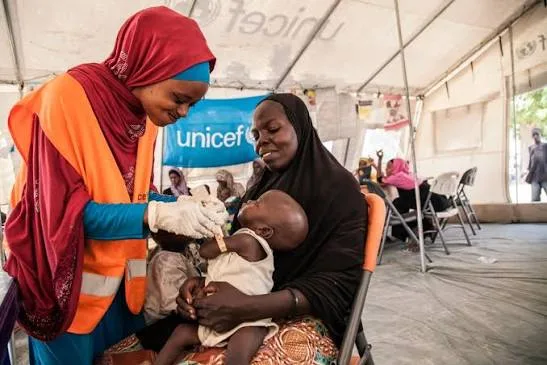
The programme, known as the Youth-led Nutrition Challenge, was launched in Maiduguri on Thursday, October 15, with a focus on improving access to nutritious food for vulnerable families, including those living in host communities and internally displaced persons’ (IDP) camps.
Speaking at the launch, UNICEF’s Chief of Borno Field Office, Tarek Akkad, represented by the organisation’s Nutrition Specialist, Aminu Usman, said the initiative would encourage young people to develop practical meal plans using food items readily available in local markets.
He explained that the challenge seeks to protect children from acute malnutrition, particularly during the first 1,000 days of life, a critical period for growth and development.
Under the programme, participating youths are expected to work together to develop affordable and nutritious meal plans suitable for pregnant women and young children. Their proposals will be presented to a panel of professionals, who will assess them based on nutritional value, affordability and practical application.
The initiative is designed to encourage locally developed solutions that vulnerable households can realistically adopt, rather than relying solely on interventions that may be difficult for families to sustain.
Pilot Programme to Cover Jere and Maiduguri
Usman said the first phase of the challenge would focus on Jere Local Government Area and Maiduguri Metropolitan Council (MMC).
The pilot will help organisers assess the effectiveness of the proposed solutions before considering an expansion to other parts of Borno State.
He said the programme would also use young people’s creativity and community connections to spread awareness about preventing malnutrition and improving household nutrition.
According to the organisers, the challenge is intended to go beyond a competition by encouraging young people to take ownership of nutrition education and share practical messages with families in their communities.
The initiative is supported by the United Kingdom government through its Foreign, Commonwealth and Development Office (FCDO), according to statements made at the launch.
Winner to Receive ₦300,000
The project coordinator, Silver Faith, said the winner of the challenge would receive ₦300,000 to help turn the proposed nutrition solution into practice.
Participants are expected to develop meal plans based on locally sourced food items, with the aim of making nutritious meals more accessible to vulnerable women and children.
The organisers also noted that the proposed food solutions would complement existing nutrition interventions, including the provision of ready-to-use therapeutic food (RUTF) for the treatment of severe acute malnutrition.
However, locally prepared meals and nutrition education are not substitutes for medical assessment or prescribed treatment for children with acute malnutrition. Their role will depend on the nutritional needs of beneficiaries and guidance from qualified health professionals.
Borno Government Pledges Institutional Support
Representing the Borno State Primary Healthcare Development Board, Mala Abdulrahman assured stakeholders that the state would provide institutional support to help connect the initiative with existing healthcare structures.
She said the programme would be linked to primary healthcare facilities, mothers’ support groups and families requiring nutrition assistance.
The organisers are working with the Foundation for Alternative Learning in Underserved Communities (FALUC) and U-Report, with technical support from UNICEF’s Nutrition Section.
The partnership is expected to draw on existing community networks to reach vulnerable households and encourage the adoption of practical nutrition messages.
Borno State continues to face humanitarian challenges linked to conflict, displacement and food insecurity. These pressures can make it difficult for families to obtain adequate food and access essential health and nutrition services.
By engaging young people in developing locally relevant solutions, UNICEF and the state government hope to strengthen community participation in preventing malnutrition and improve access to affordable, nutritious food.
The outcome of the pilot phase will help determine how the initiative can be expanded to additional local government areas.
Reporting by TalkNaijaMedia


Reader Comments (0)
No comments yet. Be the first to share your perspective on this report.