

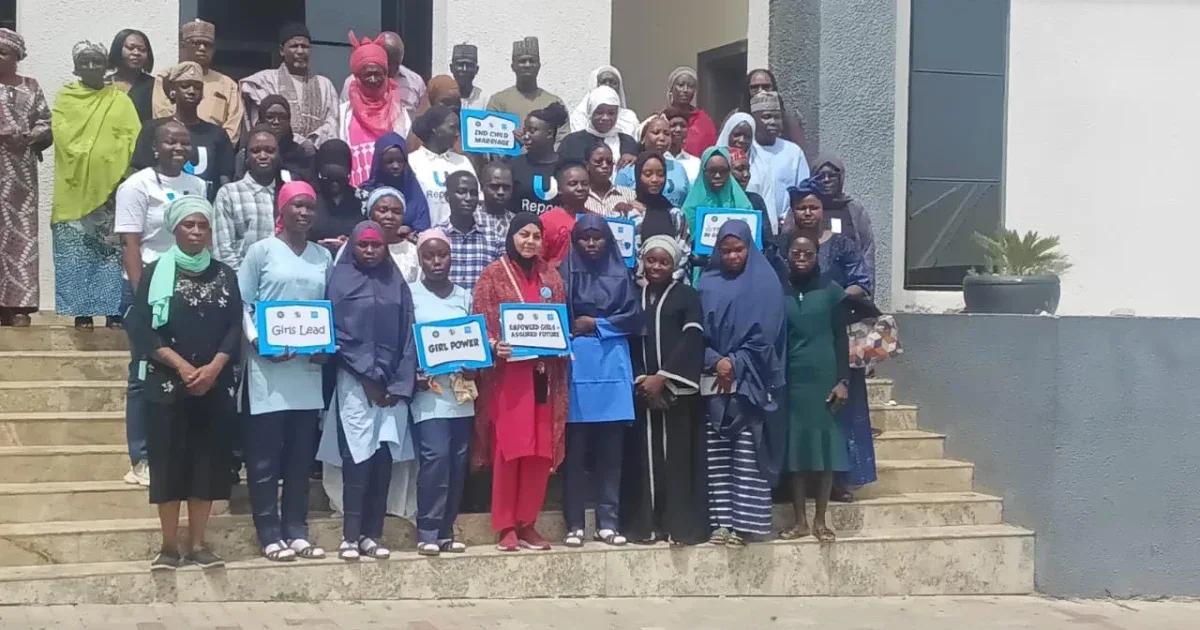
The call was made during a stakeholders’ engagement in Gombe organised by UNICEF’s Bauchi Field Office in collaboration with the Bauchi Radio Corporation, ahead of the International Day of the Girl Child, observed annually on October 11.
The engagement, themed “End Child Marriage and Invest in Girls’ Rights,” brought together traditional rulers, women’s groups, development partners, media practitioners and girls to discuss the social, cultural and economic challenges that prevent girls from reaching their full potential.
Speaking at the event, Ladi Alabi, Child Protection Specialist at UNICEF’s Bauchi Field Office, stressed the need for a comprehensive approach to addressing the challenges facing girls, particularly those exposed to early marriage and other harmful practices.
Alabi warned that child marriage could disrupt girls’ education, affect their health and limit their future opportunities. She also highlighted the health risks associated with early pregnancy and childbirth, including complications that may result in vesicovaginal fistula, a condition that can have serious physical and social consequences.
She urged governments, community leaders and other stakeholders to invest more in girls’ education and empowerment, noting that educating girls could help challenge harmful cultural practices and give them greater opportunities to make informed decisions about their lives.
The UNICEF official also called for stronger community engagement to address beliefs and social expectations that restrict girls’ choices and prevent them from continuing their education.
UNICEF Bauchi Field Office Chief, Dr Nuzhat Rafique, said ending child marriage required sustained cooperation across several sectors, including health, education, nutrition and social protection.
Rafique warned that girls would struggle to fulfil their potential if they were forced into marriage before they had the opportunity to complete their education and develop their skills.
She identified education as a critical investment in girls’ futures and called on governments and communities to remove barriers that prevent children from accessing quality learning.
The UNICEF official also emphasised the importance of inclusive education, stressing that girls should not be denied learning opportunities because of their gender, disability or family circumstances.
Participants at the meeting called for expanded awareness campaigns, mentorship programmes and practical support systems to help girls remain in school and protect them from pressure to marry early.
They also highlighted poverty and difficult household economic conditions as factors that can expose vulnerable girls to child marriage. Stakeholders therefore urged government agencies and development partners to strengthen support for disadvantaged families while expanding educational opportunities for children.
Some girls who participated in the engagement called for greater efforts to challenge gender stereotypes and provide assistance to those whose education had been interrupted. They stressed that girls needed encouragement, guidance and access to opportunities to pursue their ambitions rather than being limited by societal expectations.
The stakeholders called for continued collaboration among government institutions, traditional and religious leaders, civil society organisations and the media to promote positive social norms and strengthen the protection of girls.
The engagement came ahead of the 2026 International Day of the Girl Child, whose global theme is “End Child Marriage and Invest in Girls’ Rights.” The annual observance provides an opportunity to highlight the challenges girls face and renew efforts to protect their rights, expand access to education and support their development.
For girls in Bauchi and Gombe, stakeholders say lasting progress will depend on turning advocacy into practical action that keeps children safe, supports vulnerable families and ensures that every girl has a fair opportunity to learn, grow and shape her future.
Reporting by TalkNaijaMedia



Reader Comments (0)
No comments yet. Be the first to share your perspective on this report.