

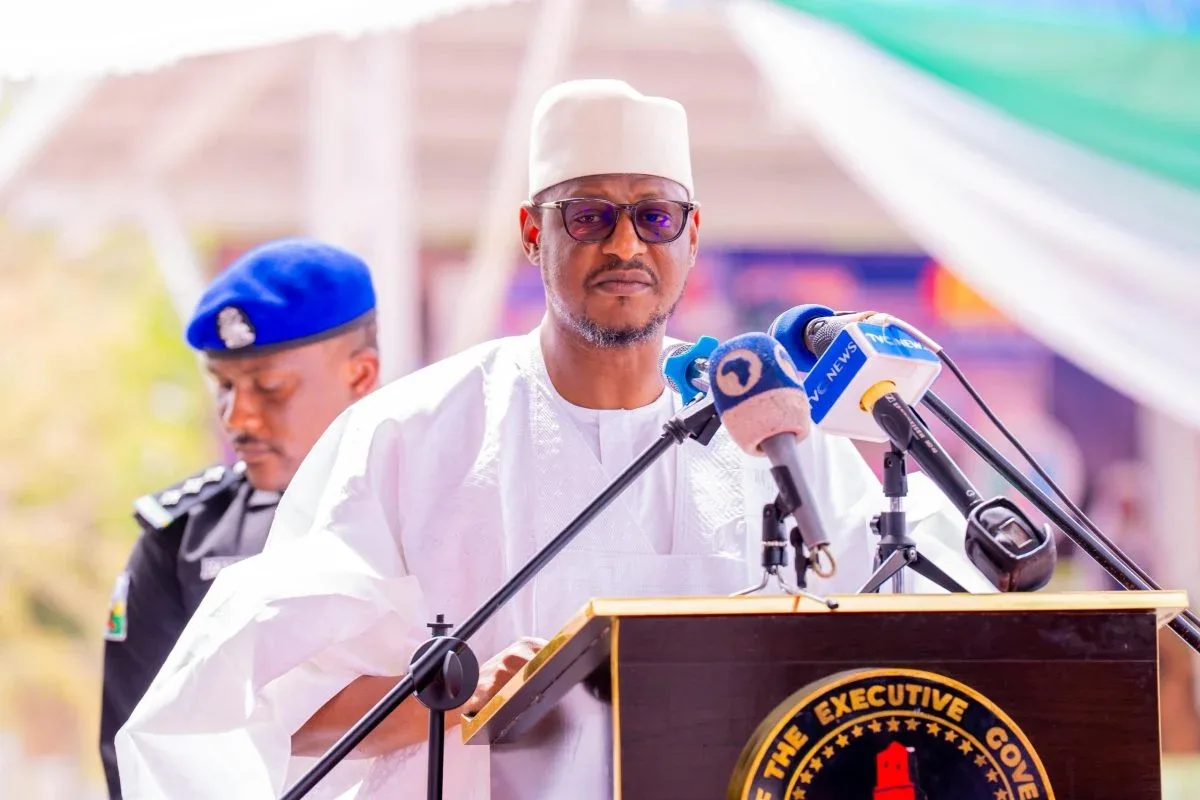
The World Bank has expressed interest in considering Katsina State’s Community Development Programme (CDP) as a possible model for adoption in other parts of Nigeria, Governor Dikko Umaru Radda has disclosed.
Radda made the disclosure while speaking at the inauguration of the Dikko Mai da Alkhairi da Alkhairi movement at the Local Government Service Commission in Katsina.
According to the governor, the interest followed a recent engagement with a World Bank delegation that reviewed the programme and expressed satisfaction with its grassroots approach and impact.
The governor said the development was an indication that a community-driven approach could help close the gap between government programmes and the people they are designed to serve.
However, the reported World Bank interest does not amount to a confirmed decision to roll out the Katsina model nationwide. Radda said the framework had been identified for consideration and possible adoption in other states.
The Katsina State Community Development Programme was launched in November 2024 as a participatory development initiative designed to give communities a stronger role in identifying and addressing their most pressing needs.
The official CDP framework covers areas including infrastructure, healthcare, education, clean water, economic empowerment, social support, gender inclusion and environmental sustainability.
The programme is structured around Katsina's 361 wards across 34 local government areas, with community development centres intended to serve as focal points for identifying needs, planning projects and monitoring implementation.
At the launch of the programme, the state government described the model as a shift from a largely top-down approach towards one in which communities participate directly in determining development priorities.
The World Bank has previously engaged with Katsina on other development programmes. In June 2026, a World Bank delegation described Katsina as one of the leading states in the implementation of the Nigeria for Women Project, while additional funding of between $6 million and $8 million was being considered to accelerate the programme in the state.
Against this background, Radda said the CDP's community-focused approach had attracted the attention of development partners.
He also stressed that the programme was intended to benefit residents across Katsina regardless of political affiliation.
At the inauguration of the new movement, Radda commended those involved in the CDP, saying the initiative had helped take government interventions closer to communities.
The movement's Director-General, Associate Professor Kamaluddeen Kabir, said the platform was inspired by the experiences of communities that had benefited from the CDP.
He listed interventions associated with the programme, including agricultural support, fertiliser distribution, water projects and other community development initiatives.
The governor also urged residents to participate in the Katsina Tree-Plant-One-T initiative, which targets the planting of about two million trees within one year.
Radda said the tree-planting campaign was intended to encourage communities to take greater responsibility for environmental protection and help address challenges linked to environmental degradation.
The inauguration also had a clear political dimension, with the newly established movement expected to operate as a grassroots platform supporting the All Progressives Congress (APC).
The organisers said the structure would extend from the state and zonal levels to wards and polling units to strengthen communication and mobilisation.
Katsina State APC Chairman, Dr Bashir Gambo Saulawa, also urged members to communicate the administration's programmes to residents and help communities understand the government's interventions.
He pointed to projects and programmes in education, healthcare, roads, irrigation and youth skills development as areas where the administration says it has made progress.
While the political activities surrounding the movement are separate from the development programme itself, the emergence of the platform shows how community structures created around government initiatives can also become part of wider political mobilisation.
For Katsina, the more significant development remains the reported interest from the World Bank in examining whether elements of its community-driven model could work elsewhere.
If the framework eventually receives broader backing or replication, it could place greater attention on community participation in the planning and delivery of public projects across Nigeria.
For now, however, the World Bank's reported position remains an expression of interest and consideration rather than a confirmed nationwide adoption.
Reporting by TalkNaijaMedia




Reader Comments (0)
No comments yet. Be the first to share your perspective on this report.