

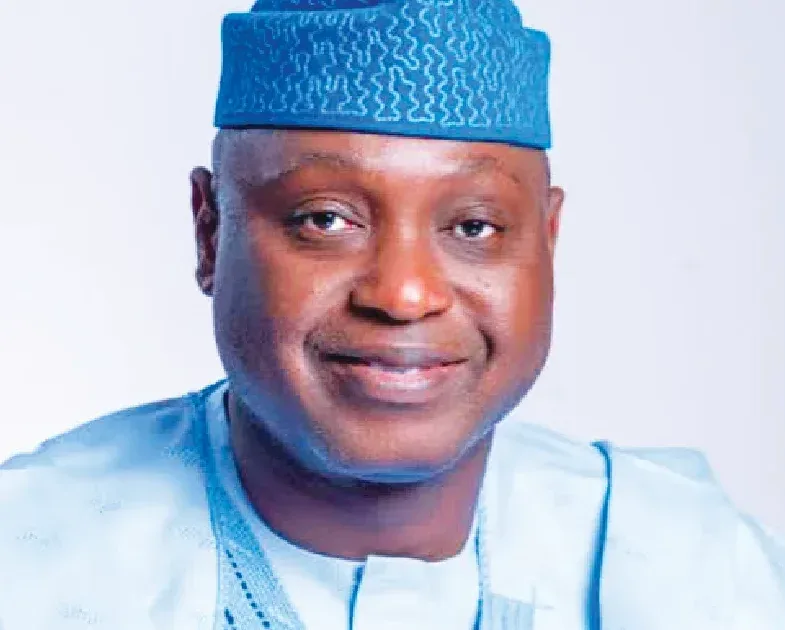
Ekiti State Governor, Biodun Oyebanji, has marked the state’s 30th anniversary by celebrating its development journey while unveiling a long-term vision aimed at transforming Ekiti into a stronger economic and technology hub over the next three decades.
Oyebanji made the remarks in a statewide broadcast on October 1, 2026, as Ekiti commemorated 30 years of statehood alongside Nigeria’s 66th Independence Anniversary.
Ekiti State was created on October 1, 1996, by the military administration of the late General Sani Abacha. It was one of six states created that year alongside Bayelsa, Ebonyi, Gombe, Nasarawa and Zamfara, bringing Nigeria’s total number of states from 30 to 36.
Reflecting on the three decades, Oyebanji acknowledged that Ekiti had experienced its share of difficulties but said residents had reasons to celebrate the progress recorded across several areas of development.
The governor also recalled the years of agitation that preceded the creation of the state and paid tribute to individuals and groups that contributed to the struggle. Among those recognised were members of the Committee for the Creation of Ekiti State, led by Chief Oladeji Fasuan, legal luminary Aare Afe Babalola, the Ewi of Ado Ekiti, Oba Adeyemo Adejugbe, other traditional rulers and numerous community leaders.
Oyebanji, who served as secretary of the state-creation committee before eventually becoming governor, described his position as governor during Ekiti’s 30th anniversary as a deeply humbling experience.
He also acknowledged the contributions of past governors and administrators, including Col. Inua Bawa, Navy Capt. Atanda Yusuf, Otunba Niyi Adebayo, Ayo Fayose, Segun Oni and Kayode Fayemi, as well as officials who served during periods when the state was under military administration or transitional leadership.
According to the governor, the vision of Ekiti’s founding fathers was to create a state where its human and natural resources could be developed inclusively to improve the prosperity and quality of life of its people.
He said the original vision also included building an industrialised economy driven by private-sector investment, enterprise and productivity.
With that objective in mind, Oyebanji announced that his administration would use the 30th anniversary as the starting point for a 30-year transformation agenda under the theme, “Ekiti at 30: Celebrating the Past and Creating the Future.”
The long-term agenda is expected to focus on agricultural production and agro-processing, technology and innovation, education, research, skills development, tourism, culture, the creative economy, youth entrepreneurship and sustainable development.
Oyebanji said the ultimate objective would be to ensure that infrastructure and other investments made over the past 30 years translate into stronger economic activity, quality employment, higher productivity, business opportunities and improved living standards.
One of the projects highlighted by the governor is the multi-billion-naira Ekiti Knowledge Zone, which he described as a technology park and economic ecosystem designed to support innovation and the creative potential of young people.
He said the state's long-term ambition is to move beyond its traditional reputation as a civil-service-oriented economy and develop Ekiti into a technology hub and a significant centre for commercial activity and international trade.
The governor also identified the Special Agricultural Processing Zone as another major project expected to contribute to the state's economic transformation when operational.
Oyebanji said the two initiatives would complement the government's broader Shared Prosperity Agenda and help create new opportunities for investment, employment and enterprise.
The governor also reflected on the historical significance of Ekiti’s creation, linking the state's journey to earlier struggles and conflicts involving its people. He specifically referenced the Kiriji War and the wider history of resistance and self-determination among Ekiti communities.
As part of the anniversary programme, the state government said it would engage young people in a conversation on October 7, 2026, at the Obafemi Awolowo Civic and Convention Centre in Ado Ekiti. The engagement is intended to assess the state's present position and discuss its future direction.
Oyebanji also used the anniversary occasion to speak about the 2027 presidential election and called on Ekiti residents to support President Bola Tinubu's re-election, citing what he described as the benefits and support the state has received from the Federal Government.
That appeal is a political position expressed by the governor. INEC's formally released timetable schedules the 2027 presidential and National Assembly election for February 20, 2027, while the governorship and State House of Assembly elections are scheduled for March 6, 2027.
As Ekiti enters its fourth decade, the anniversary has therefore become both a moment of reflection on the state's history and an opportunity for its leadership to outline a longer-term economic vision.
For the Oyebanji administration, the stated objective is to build on the foundations established over the past 30 years and position Ekiti for greater activity in agriculture, technology, education, enterprise, tourism and the creative economy in the decades ahead.



Reader Comments (0)
No comments yet. Be the first to share your perspective on this report.