

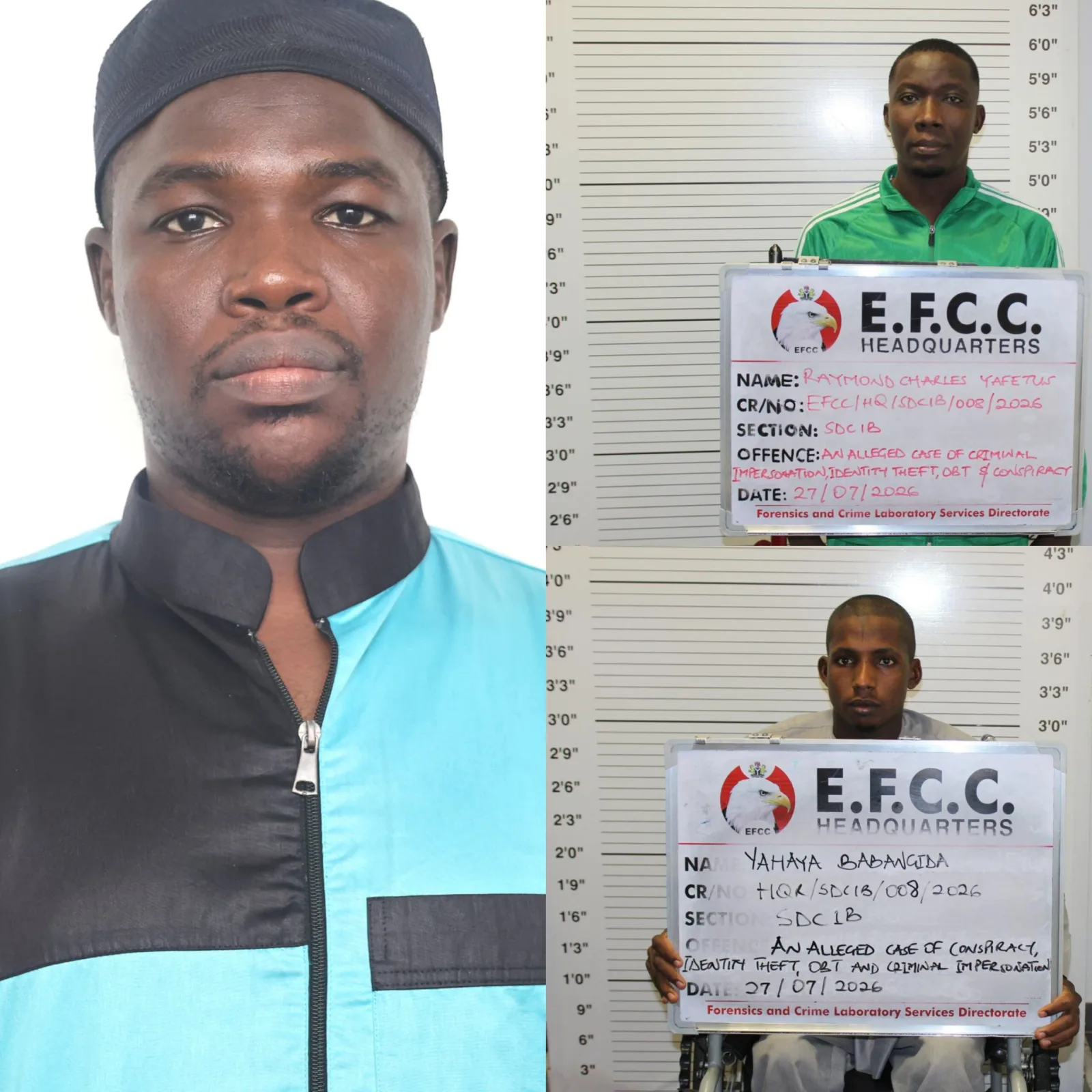
The commission alleged that the suspects operated accounts in different Nigerian banks while posing as Adekunle Tunde Olaoluwa, popularly known as Tunde Ednut. The alleged scheme reportedly took place between April and June 2026 in Abuja.
One of the charges accused the defendants of using the influencer’s identity to obtain money from members of the public. The prosecution said the alleged conduct violated provisions of Nigeria’s cybercrime legislation.
When the charges were read in court, the defendants reported to have been arraigned pleaded not guilty.
EFCC prosecuting counsel Elizabeth Alabi subsequently asked the court to schedule the case for trial and order the defendants’ remand pending further proceedings.
Justice S. O. Ibrahim reportedly ordered their remand at the Kuje Correctional Centre in Abuja and adjourned the case until November 17, 2026.
The allegations have not been established as proven facts, and the defendants are entitled to the presumption of innocence while the case proceeds.
Earlier Case Also Linked to Tunde Ednut’s Identity
The latest report follows an earlier EFCC case in July 2026 involving an alleged ₦5.307 million fraud linked to the impersonation of Tunde Ednut.
In that separate proceeding, Auwal Ibrahim was arraigned before the Federal Capital Territory High Court in Bwari, Abuja, over allegations that he and an alleged accomplice used a bank account opened in the influencer’s name to collect money from members of the public.
Ibrahim pleaded not guilty in that case, which was adjourned for further proceedings.
The earlier case and the October report concern similar allegations, but their charges, amounts and court proceedings should be treated separately unless official records establish a direct connection.
The cases highlight the risks associated with online impersonation and fraudulent requests for money using the names of public figures. Members of the public should verify payment requests through trusted channels before transferring funds to accounts claiming to represent celebrities or social media personalities.
Reporting by TalkNaijaMedia


Reader Comments (0)
No comments yet. Be the first to share your perspective on this report.