
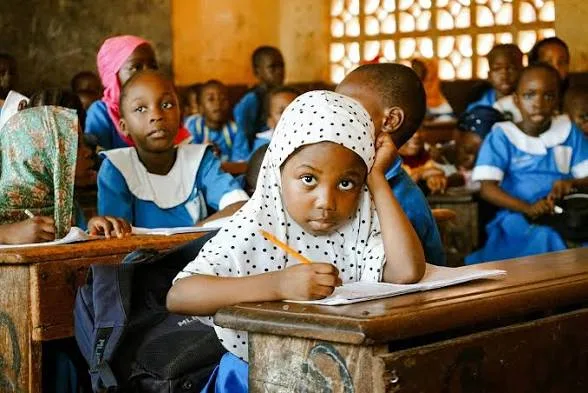
According to the organisers, the forum will provide an opportunity to examine major challenges affecting the country’s education sector and develop practical responses to improve access, quality, financing and institutional performance.
Among the issues expected to feature prominently are weak foundational literacy and numeracy, gaps between academic qualifications and workplace requirements, limited research output, inadequate education funding, unequal access to learning opportunities and weaknesses in institutional coordination.
Participants are also expected to consider how successful international education practices can be adapted to Nigeria’s needs, while strengthening local schools, vocational institutions and universities.
The forum comes amid growing concerns about whether Nigeria’s education system is adequately preparing its large and youthful population for future economic opportunities. Education stakeholders have repeatedly highlighted the need to improve teaching standards, expand access to quality learning and equip students with skills relevant to emerging industries.
Organisers say the discussions will examine how curricula, teaching methods and training programmes can better develop digital, technical, analytical and problem-solving abilities. The growing influence of artificial intelligence, automation and other technologies is also expected to feature in conversations about the future of education and employment.
The forum will address the relationship between education and the labour market, including the need to improve links between educational institutions and employers. Participants are expected to explore ways to ensure that graduates leave school with skills that can be applied in real workplaces, while expanding opportunities for technical and vocational education.
Nigeria’s Overseas Education Spending in Focus
Another major issue expected to feature at the forum is the amount Nigerians spend on education abroad and what the trend means for the competitiveness of local institutions.
Data from the Central Bank of Nigeria’s Balance of Payments statistics, reported by Nigerian financial news outlets, show that Nigerians spent approximately $1.39 billion on foreign education-related payments in the first half of 2025. Estimated spending between 2020 and mid-2025 reached about $11.1 billion.
The figures have renewed discussion about the capacity of Nigeria’s education system to attract and retain students, particularly in higher education.
Studying abroad can provide access to international qualifications, specialised facilities and broader academic networks. However, the scale of spending has raised questions about the quality of local learning environments, research infrastructure, academic programmes and opportunities for students.
The forum is expected to examine how Nigeria can strengthen its institutions without discouraging international study. Possible areas of discussion include partnerships with foreign universities, research collaboration, engagement with Nigerians in the diaspora and investment in classrooms, laboratories and other learning facilities.
Organisers say international partnerships could help improve local capacity and expose students and researchers to wider opportunities, provided the relationships also deliver lasting benefits to Nigerian institutions.
Funding, Inclusion and Research Among Key Priorities
The summit is expected to focus on five broad areas: education quality and employability; research, innovation and international academic visibility; sustainable education financing; inclusion and human capital development; and governance and institutional strengthening.
Discussions will cover basic and secondary education, technical and vocational education and training, higher education, informal learning and lifelong education.
Research and innovation will also be considered, including how universities can secure stronger research funding and translate findings into products, services and practical solutions.
Education financing is another central concern. Participants are expected to examine how public resources can be complemented by private investment, public-private partnerships, domestic revenue mobilisation and more efficient spending.
The objective is to ensure that available funding leads to measurable improvements in school facilities, teaching quality and learning outcomes. Effective allocation, monitoring and accountability will therefore be important parts of the discussions.
The forum will also examine barriers that prevent some children from accessing education. Poverty, gender inequality, disability, insecurity and geographical isolation can limit learning opportunities, particularly for girls, vulnerable children and those living in underserved or conflict-affected communities.
Stakeholders are expected to explore approaches that can make education more inclusive while improving access to learning for groups that face persistent disadvantages.
Lifelong learning will also feature in discussions about helping Nigerians update their skills, respond to economic changes and improve their employment prospects throughout their working lives.
What the Forum Hopes to Achieve
The December gathering is expected to provide a platform for state and federal authorities to compare experiences, identify gaps in current interventions and discuss practical reforms that can be implemented across different levels of the education system.
State governments will be particularly important to the process because they play major roles in managing education at the subnational level. Cooperation between federal and state authorities could help align national priorities with local needs and encourage the sharing of successful approaches.
Ultimately, the forum’s significance will depend on whether its discussions lead to clear recommendations, effective implementation and sustained investment in education.
With concerns ranging from foundational learning deficits to overseas education spending and the skills required by emerging industries, the meeting is expected to focus on how Nigeria can build a system that serves learners more effectively while improving the country’s ability to compete globally.
Reporting by TalkNaijaMedia



Reader Comments (0)
No comments yet. Be the first to share your perspective on this report.