

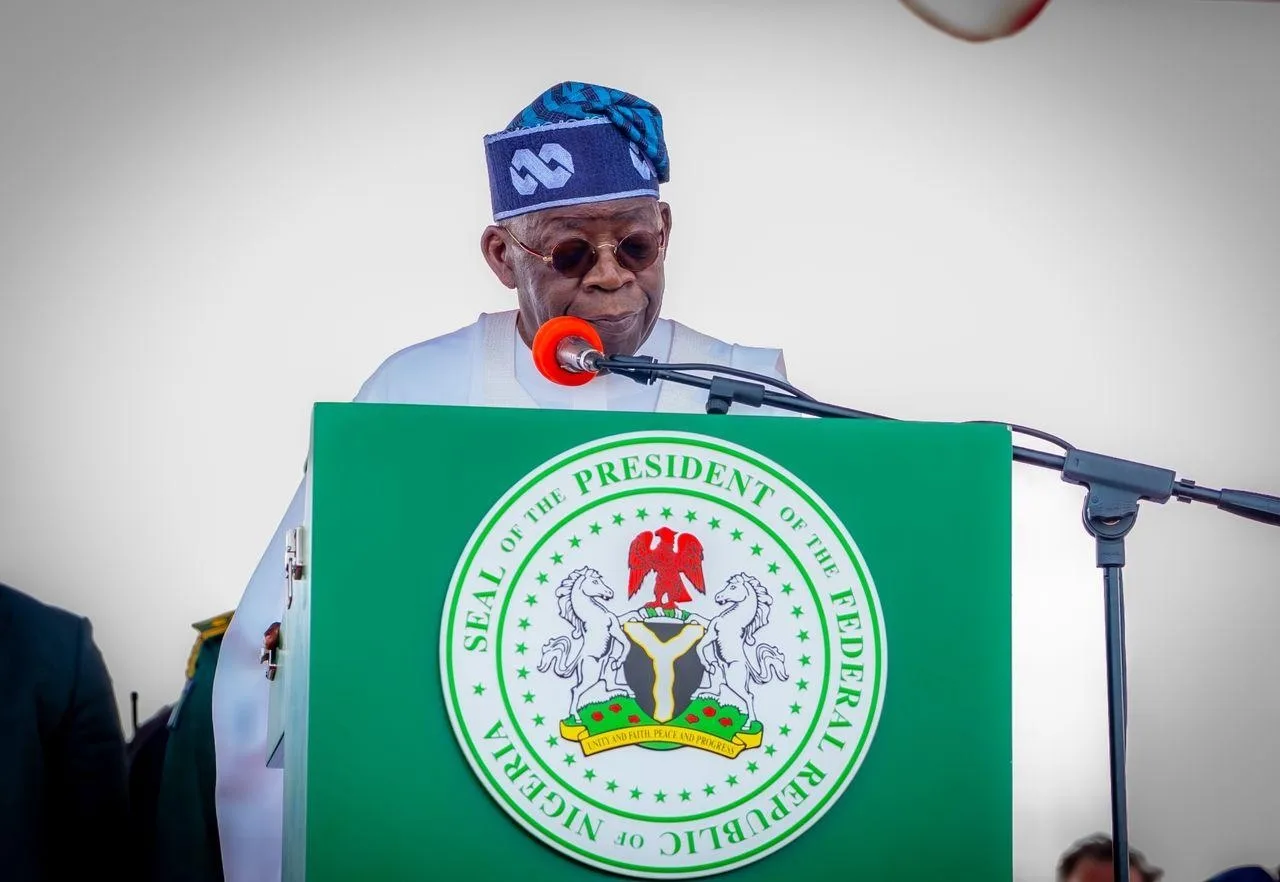
He made the remarks during an appearance on Arise Television’s Prime Time programme on Thursday, October 15, 2026, as political parties began preparing for the 2027 general elections.
According to George, Tinubu had considered the country’s electoral landscape and concluded that sustaining the progress his administration claims to have achieved was more important than embarking on a nationwide campaign tour.
He argued that there was no constitutional requirement compelling a presidential candidate to visit every state during an election campaign, adding that the president intended to maintain government operations while promoting his administration’s policies.
George also defended Tinubu’s economic reforms, arguing that the measures were intended to address longstanding structural weaknesses in the Nigerian economy and restore investor confidence.
He acknowledged that the reforms had brought considerable financial pressure on households but maintained that the government’s policies were designed to create a more stable economic environment and encourage investment over time.
Among the measures he highlighted was the removal of the petrol subsidy in May 2023, which he described as a major step towards reducing the financial burden of subsidy payments on government revenue.
George argued that the previous subsidy arrangement had placed significant pressure on public finances, limiting the resources available for infrastructure and other development priorities.
He also criticised opposition politicians who have promised to reverse some of the administration’s policies, maintaining that economic restructuring requires consistency and that the country cannot return to its previous arrangements without considering the financial consequences.
The APC campaign committee member further cited economic assessments by international institutions, including the World Bank and the International Monetary Fund, as evidence that Nigeria’s economy was showing signs of adjustment and recovery.
He maintained that the administration’s policies had helped improve the country’s economic outlook, although many Nigerians continue to face high living costs and pressure on their purchasing power.



Reader Comments (0)
No comments yet. Be the first to share your perspective on this report.