

With Election Day approaching, the figures show how independent political organisations are spending substantial sums to influence competitive races for seats in Congress. Three of the five groups are aligned with Republicans, and approximately two-thirds of their combined spending is expected to benefit the Republican Party, also known as the Grand Old Party (GOP).
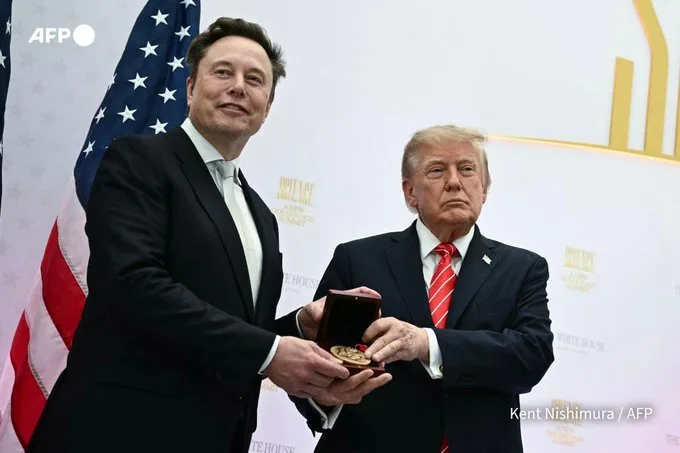
Billionaire entrepreneur Elon Musk is among the most prominent donors supporting Republican-aligned groups. Federal election filings cited in recent reports show that Musk has contributed approximately $446 million to political organisations during the 2026 election cycle, with much of the money directed towards Republican interests.
One of the beneficiaries is the Senate Leadership Fund, a major Republican-aligned super political action committee (super PAC) involved in supporting Republican candidates and opposing Democratic contenders in Senate races.
The large sums being spent by outside groups come as Democrats maintain a fundraising advantage in several competitive congressional contests through direct donations to candidates and contributions to party committees. However, strong fundraising by individual candidates does not necessarily translate into an advantage in outside spending.
The difference reflects the structure of US campaign finance laws. Individuals are generally limited in how much they can contribute directly to a federal candidate or national party committee. For the 2025–2026 election cycle, the Federal Election Commission sets the individual contribution limit at $3,500 per election for a candidate and $44,300 per calendar year for a national party committee.
Super PACs, by contrast, may accept unlimited contributions from individuals, corporations and labour organisations, provided their spending remains independent of candidates’ campaigns. Hybrid PACs can also operate separate accounts for contributions and independent expenditures under applicable rules.
The expansion of these organisations followed major court decisions in 2010. In Citizens United v. Federal Election Commission, the US Supreme Court ruled that the government could not prohibit certain independent political expenditures by corporations and unions. A subsequent federal appeals court decision enabled independent-expenditure-only committees to accept unlimited contributions.
Critics argue that the system gives wealthy individuals and organisations greater opportunities to shape political debate, particularly when money is channelled through groups that do not always reveal their original funders publicly. Such funding is commonly associated with the term “dark money”, although not all super PAC spending qualifies as dark money because super PACs generally have federal disclosure obligations.
The growing expenditure has also raised questions about whether large campaign budgets can determine election outcomes. Jen Heerwig, an associate professor of sociology at Stony Brook University, has argued that extensive spending does not automatically guarantee victory where a candidate lacks strong grassroots support.
Her observation highlights the distinction between the ability to purchase advertising and the ability to persuade voters. Campaign funding can help candidates and their allies reach audiences, but voter enthusiasm, local political conditions and the candidates themselves can also shape electoral results.
Senate contests have attracted particularly heavy outside spending, with much of the activity directed towards negative advertising against opposing candidates.
In Texas, Democrat James Talarico has faced substantial spending from groups opposing his Senate bid as he seeks to break the state’s long-running Republican hold on Senate elections. In Ohio, Democrat Sherrod Brown has also faced extensive outside spending as he attempts to return to the Senate in a special election.
Political spending groups often focus on attack advertisements designed to weaken opponents rather than promote their preferred candidates directly. While such campaigns can dominate television and digital advertising, their precise effect on voter decisions is difficult to measure.
The scale of the spending has renewed debate over campaign finance transparency, political influence and public confidence in American democratic institutions. Researchers and critics have warned that a constant stream of negative political advertising may deepen public frustration with politics, even when it does not determine the eventual winner.
The 2026 midterm campaign therefore offers another illustration of the financial power wielded by outside political organisations in the United States, as candidates and parties compete for control of Congress ahead of the November 3 vote.
Reporting by TalkNaijaMedia




Reader Comments (0)
No comments yet. Be the first to share your perspective on this report.