
NUPRC Chief Executive Oritsemeyiwa Eyesan, represented by the commission’s Assistant Director of Operations, Prosper Omonedo, said deliveries to domestic refineries improved after disagreements between crude producers and refiners disrupted supplies during the first quarter of the year.
According to the commission, domestic refineries received 53.7 million barrels of crude oil and condensate in the second quarter, representing 97.4 per cent of the allocated volume, while deliveries in the third quarter stood at 45.1 million barrels, or 76.2 per cent of allocations.
The improvement reflects ongoing efforts to implement the Domestic Crude Supply Obligation under the Petroleum Industry Act 2021, which provides a framework for supplying crude to licensed domestic refineries.
However, the regulator acknowledged that commercial disagreements remain a challenge for refiners seeking access to locally produced crude.
To address transportation costs and supply inefficiencies, NUPRC is consulting crude producers, refiners and other industry stakeholders on a proposed domestic crude swap framework.
Under the arrangement, a refinery could receive crude from a suitable nearby production or export point rather than transporting its allocated grade over a longer distance. The commission estimates that the approach could reduce transportation costs by between $3 and $4 per barrel, although the actual savings will depend on how the arrangement is implemented.
Eyesan also reported that Nigeria produced an average of 1.717 million barrels per day of crude oil and condensate in September 2026, representing a 2.34 per cent increase from August. Crude oil production alone averaged 1.53 million barrels per day.
She attributed the improvement to better asset maintenance, stronger security around evacuation infrastructure, collaboration with operators and efforts to restore previously shut-in production.
The commission also reaffirmed its commitment to a transparent 2026 oil licensing round involving 40 blocks. The process is expected to include published evaluation criteria and mandatory disclosure of beneficial ownership, while the drill-or-drop principle is intended to discourage investors from holding licences without developing the associated assets.
According to Eyesan, 22 recent awardees are expected to contribute at least 250,000 barrels per day within five years.
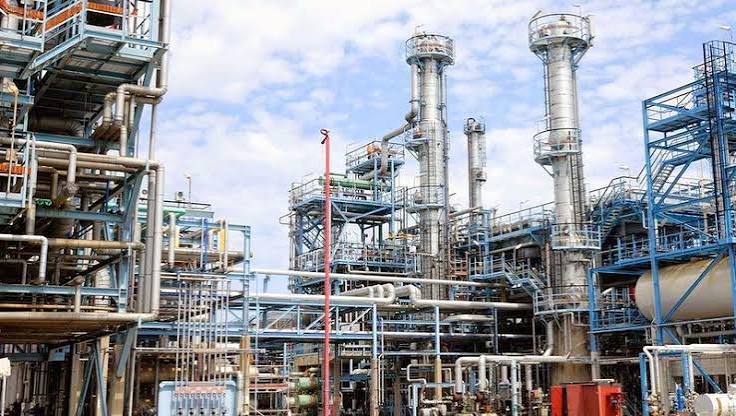
While the upstream sector pursues higher production and more reliable crude deliveries, the Federal Government says it is adopting a stricter commercial approach to rehabilitating Nigeria’s four state-owned refineries in Port Harcourt, Warri and Kaduna.
Permanent Secretary of the Federal Ministry of Petroleum Resources, Patience Oyekunle, said the government did not want the facilities to become stranded assets. She said their rehabilitation and repositioning would depend on technical assessments, stronger partnerships and improved operational discipline.
The four state-owned refinery facilities have a combined nameplate capacity of 445,000 barrels per day, but they have experienced prolonged shutdowns and rehabilitation challenges. Their future will depend on whether a commercially viable operating model can be established and sustained.
The government also highlighted the growing importance of private refining capacity, particularly the Dangote Petroleum Refinery, which has a nameplate capacity of 650,000 barrels per day. Expanding domestic refining is expected to improve Nigeria’s ability to supply petroleum products locally, although nameplate capacity does not necessarily equal actual daily output.
Oyekunle said the country needed to move beyond crude extraction by expanding domestic refining, petrochemicals, gas processing and manufacturing. She also stressed that increasing crude production would deliver greater benefits if more value could be retained within the Nigerian economy.
Gas infrastructure was another major focus at the energy conference, where the Nigerian Midstream and Downstream Petroleum Regulatory Authority (NMDPRA) unveiled Revision II of the Nigerian Gas Transportation Network Code.
NMDPRA Chief Executive Rabiu Umar said the revised code would provide clearer rules for companies using shared gas pipelines, covering issues such as transportation access, gas measurement, nominations and the management of imbalances across the network.
The framework is intended to improve transparency and provide more predictable access to pipeline infrastructure for gas producers, power generation companies, fertiliser manufacturers, shippers and other investors.
Umar said participation in the gas transportation network had increased since the introduction of the earlier version of the code, while imbalances on the western network had declined by about 30 per cent.
He said the latest revision builds on those improvements and provides clearer provisions for managing gas transportation, with additional rules intended to support the development of regional and international pipeline networks.
The regulator also highlighted ongoing infrastructure projects, including the Obiafu-Obrikom-Oben gas pipeline, improvements to the Escravos-Lagos Pipeline System and the Ajaokuta-Kaduna-Kano pipeline. These projects are intended to strengthen the movement of gas between production areas and consumers, including markets in northern Nigeria.
The government’s wider gas strategy targets production of 10 billion standard cubic feet per day by 2027 and 12 billion standard cubic feet per day by 2030. Achieving those goals would require sustained investment in production, processing, transportation and domestic consumption.
Umar also disclosed that the authority was in advanced discussions with the Nigerian National Petroleum Company Limited on a pilot programme for a national strategic petroleum reserve.
The proposed pilot would use depots operated by the National Pipeline and Storage Company in Ibadan, Enugu and Suleja. Strategic stocks could help cushion the domestic market against supply disruptions and external price shocks, although the programme’s effectiveness will depend on the volume of reserves established, storage arrangements and the rules governing their release.
The NMDPRA further announced plans to establish nine fuel-testing laboratories nationwide by the second half of 2027. The first laboratory had recently been launched in Port Harcourt, with two additional facilities expected by the end of 2026.
The initiative, being developed with Bureau Veritas and Ace Energy and Power Solutions, is intended to strengthen fuel quality testing and support the development of a national reference laboratory system.
The regulator said stronger testing capacity would improve the monitoring of petroleum products and help build confidence in the domestic downstream market.
OTL Africa Advisory Board Chairman Adetunji Oyebanji said the industry had changed significantly since the event began in 2007, with private refining and domestic supply arrangements creating new opportunities for African energy markets.
However, he warned that insecurity along international shipping routes, geopolitical tensions and disruptions to global supplies continued to put pressure on fuel availability and transportation costs.
He stressed the need for reliable feedstock, efficient operations, predictable regulations and stronger cooperation among governments, investors and industry operators.
The developments outlined at the conference point to a broader effort to strengthen Nigeria’s energy value chain, from crude production and gas transportation to refining and fuel quality assurance.
Nevertheless, the delivery of these ambitions will depend on sustained investment, transparent regulation, reliable infrastructure and the ability of operators to run facilities on a commercially viable basis. The immediate challenge is to turn higher crude supply and new regulatory measures into dependable energy products, improved industrial activity and lasting benefits for Nigerian households and businesses.
Reporting by TalkNaijaMedia



Reader Comments (0)
No comments yet. Be the first to share your perspective on this report.