

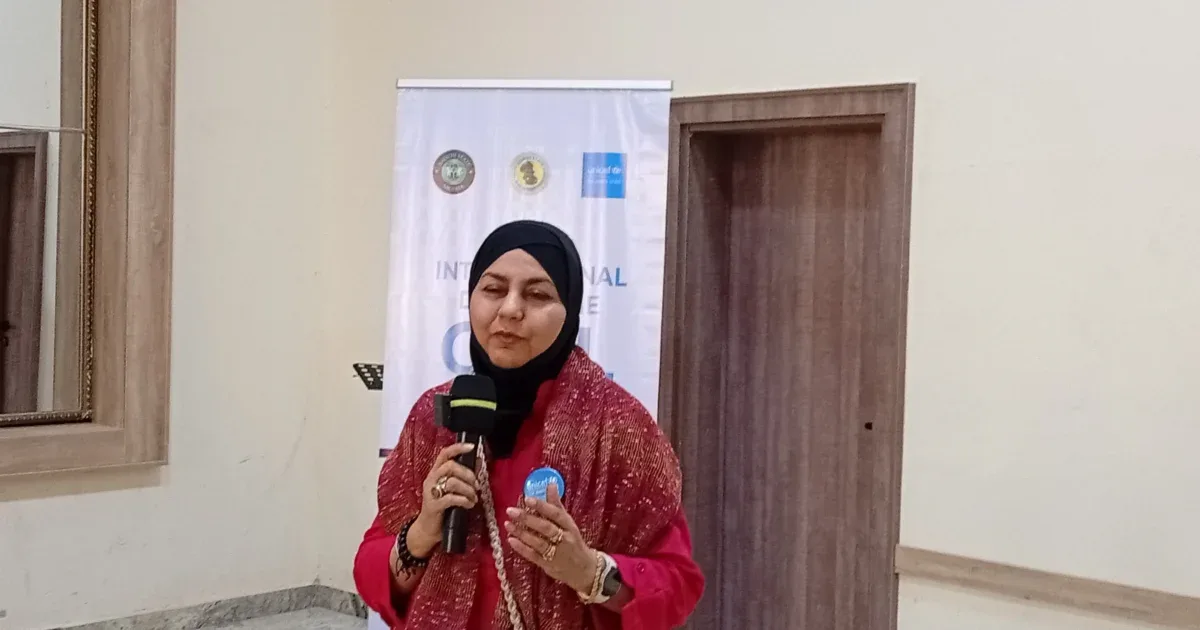
The United Nations Children’s Fund (UNICEF) has called on parents, traditional rulers, community leaders and other stakeholders in Bauchi and Gombe states to strengthen positive parenting and increase investment in the education, health and wellbeing of girls as part of efforts to tackle child marriage.
The call was made during a stakeholder engagement in Gombe organised by UNICEF in collaboration with traditional leaders, women’s groups, development partners, the media and girls to mark the 2026 International Day of the Girl Child.
The event brought together stakeholders from Bauchi and Gombe to discuss practical ways of protecting girls’ rights, improving their wellbeing and expanding their access to education, skills and opportunities.
The 2026 International Day of the Girl is being observed under the theme “End child marriage and invest in girls’ rights!” UNICEF says the annual observance, held on October 11, is intended to amplify girls’ voices and promote actions that allow them to learn, grow and make decisions about their futures.
Speaking at the Gombe engagement, UNICEF Chief of Bauchi Field Office, Dr Nuzhrat Rafiq, identified positive parenting as an important tool for addressing harmful social norms that contribute to child marriage.
Rafiq urged parents and community leaders to play a more active role in decisions affecting girls, while calling on government institutions responsible for education, health, nutrition and social development to strengthen programmes that support adolescent girls.
She noted that child marriage remains a serious concern in both Bauchi and Gombe and warned that girls who are married too early can lose opportunities to complete their education and develop their skills.
According to her, keeping girls in school is among the interventions that can help delay marriage while giving them the opportunity to acquire knowledge and skills for their future.
UNICEF's position is consistent with its wider child-marriage strategy in West and Central Africa, which places emphasis on keeping girls in school, providing health and social services, strengthening community dialogue and working with families to change harmful social norms.
Rafiq also stressed the importance of inclusive education, saying girls, including those living with disabilities, should have equal opportunities to access and remain in school.
The UNICEF official further called for stronger investment in healthcare and nutrition, alongside opportunities that would enable girls to develop careers and participate meaningfully in society as adults.
Also speaking at the engagement, UNICEF Bauchi Field Office Child Protection Specialist, Lafiya Alabi, identified harmful social norms as one of the major barriers to the full realisation of girls’ rights.
Alabi explained that practices can become deeply entrenched in communities when they are repeated across generations and eventually treated as normal. He called for traditional and religious leaders, families and other community stakeholders to take part in changing practices that negatively affect girls.
He also highlighted the connection between child marriage, early pregnancy and disruption of girls’ education, noting that girls who leave school early can lose important opportunities to acquire further education, skills and career prospects.
UNICEF has also been supporting adolescent girls with life-skills programmes designed to help them navigate adolescence, set goals, build confidence and make informed decisions about their futures.
The organisation's broader approach reflects its emphasis on education, health, protection, social services and community engagement as key tools for reducing the risks associated with child marriage.
UNICEF has continued to emphasise the importance of investing in Nigerian girls. In previous programmes, the organisation has highlighted education, protection from harmful practices, health services and skills development as critical areas for adolescent girls, particularly those facing poverty, disability, insecurity or other barriers.
Globally, UNICEF estimates that about one in five girls are married before the age of 18, representing roughly 650 million women and girls alive today who experienced marriage during childhood. The agency says more than 12 million girls are married before adulthood each year, with sub-Saharan Africa recording the highest regional prevalence.
The organisation maintains that ending child marriage requires more than legislation alone, stressing the importance of keeping girls in school, expanding access to essential services and working with families and communities to challenge harmful norms.
For Bauchi and Gombe, stakeholders at the Gombe engagement called for sustained cooperation among families, traditional institutions, government agencies, civil society organisations and girls themselves to ensure that more girls can remain in school, stay healthy and have greater control over their futures.
Reporting by TalkNaijaMedia




Reader Comments (0)
No comments yet. Be the first to share your perspective on this report.