

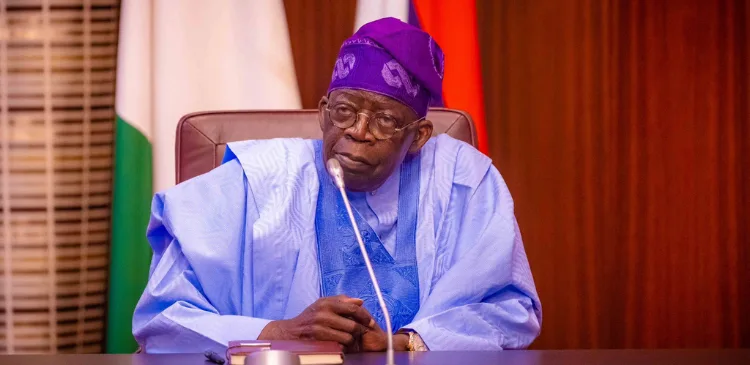
The president said the government had begun a difficult economic adjustment because sustainable growth required stabilising the economy and creating conditions for businesses to invest, expand production and employ more Nigerians.
He maintained that the reforms were designed to remove barriers that had prevented the country from fully benefiting from its human and natural resources. However, he acknowledged that economic progress must go beyond favourable statistics to deliver better jobs, higher productivity and improved living standards.
Tinubu also stressed the need to address underemployment and improve the quality of work, arguing that infrastructure, education and industrial policies should be assessed by their contribution to productive activity, skills development and employment.
Figures from the National Bureau of Statistics showed that Nigeria’s real gross domestic product grew by 3.89 per cent year-on-year in the first quarter of 2026, compared with 3.13 per cent in the corresponding period of 2025. The non-oil sector accounted for 96.08 per cent of real GDP, while manufacturing grew by 3.29 per cent and the oil sector by 2.57 per cent.
The president also cited capital importation of $10.37 billion in the first quarter of 2026, representing an 83.83 per cent increase from the same period in 2025. However, official figures show that portfolio investment accounted for the overwhelming share of those inflows, while foreign direct investment represented only about 1.3 per cent.
The figures indicate renewed foreign participation in Nigeria’s financial markets, although attracting more long-term investment into productive industries remains an important challenge.
Oyedele proposes framework to protect policy consistency
A major development at the summit was the presentation of a draft Nigerian Economic Policy Framework by the Minister of Finance and Coordinating Minister of the Economy, Taiwo Oyedele.
Oyedele said Nigeria’s development difficulties were linked not only to a shortage of economic plans but also to inconsistent policymaking, weak implementation and the tendency of successive administrations to reverse earlier decisions.
The proposed framework seeks to establish enduring principles for economic decision-making, reduce uncertainty for businesses and ensure that government policies are assessed by their effects on employment, household incomes and productivity.
Oyedele said the framework was intended to outlast individual administrations rather than serve as another government programme or political manifesto.
Among its key proposals is a requirement for major economic interventions to undergo policy impact assessments. Under the proposed arrangement, policymakers would have to explain the problem a policy is intended to solve, provide supporting evidence, identify its beneficiaries and costs, and state the conditions under which the intervention should end.
The draft also proposes an annual National Economic Scorecard to track changes in real wages, productive employment and poverty levels.
Oyedele outlined seven interconnected priorities: stability, productivity, enterprise, capital, people, markets and institutions. He argued that private businesses should drive economic growth, while government should provide public infrastructure, uphold the rule of law, correct market failures and protect vulnerable citizens.
He also called for better coordination among government institutions so that the combined effect of regulations, taxes and other policy decisions would not impose unnecessary burdens on businesses.
The framework remains a consultation document and has not yet received final government approval. The Finance Ministry has invited public input until November 27, 2026, after which the proposal is expected to undergo validation before consideration by the Federal Executive Council and endorsement by the National Economic Council.
Bagudu rules out return to petrol subsidy
Minister of Budget and Economic Planning Abubakar Bagudu said the Tinubu administration would maintain its economic reform programme and would not return to the former petrol subsidy arrangement.
Bagudu argued that reversing the reforms could undermine efforts to address longstanding economic distortions. He nevertheless acknowledged the need for better implementation, responsive policy adjustments and targeted support for vulnerable Nigerians affected by rising living costs.
He said increased revenue available to federal, state and local governments should create opportunities to improve infrastructure and public services, provided the different levels of government coordinate their spending effectively.
Bagudu reiterated the government’s ambition to build a $1 trillion economy by 2030, identifying agriculture, manufacturing, digital technology and human capital development as important drivers.
He also highlighted initiatives intended to encourage local production, strengthen supply chains, expand broadband connectivity and improve access to finance for micro, small and medium-sized enterprises.
The minister said development programmes should reflect the economic strengths of individual communities, including agriculture, fishing, livestock and textiles.
Soludo calls for faster growth and stronger local production
Anambra State Governor Chukwuma Charles Soludo urged Nigeria to accelerate economic growth and increase patronage of locally manufactured products, warning that the country was missing opportunities to create jobs and strengthen domestic industries.
Soludo argued that inadequate demand for Made-in-Nigeria goods weakened the potential of local manufacturers and their supply chains. He put the potential employment cost at about 10 million jobs, although that estimate should be understood as his assessment rather than an independently established count of jobs lost.
He also warned that the economy’s current growth rate was insufficient to achieve substantial poverty reduction.
Soludo said Nigeria would need annual growth of roughly seven to nine per cent to make significant progress against multidimensional poverty, while growth of about 12 per cent would be required to reach the government’s $1 trillion economy ambition by 2030.
The governor called for stronger coordination between federal and state governments to contain inflation, attract investment and encourage domestic production. He also cautioned against interpreting currency appreciation or other short-term economic improvements as proof that the country’s structural challenges had been resolved.
Rabiu urges creation of more major industrial firms
BUA Group Chairman Abdul Samad Rabiu welcomed aspects of the government’s reforms, particularly changes to the foreign exchange system, which he said had improved access to foreign currency for businesses seeking to import machinery and production inputs.
However, Rabiu argued that industrialisation would require policy consistency, reliable infrastructure and access to affordable long-term financing.
He called on Nigeria to develop at least 100 additional major industrial companies across sectors such as manufacturing, agriculture, mining and technology.
According to him, high borrowing costs and dependence on short-term loans make it difficult for businesses to finance factories, equipment and other investments that may take many years to generate returns.
Rabiu urged pension funds, insurance companies, banks, development finance institutions and capital-market operators to direct more long-term funding towards productive investments.
He also called for closer cooperation between government and the private sector, arguing that businesses need predictable policies to make long-term investment decisions.
Amina Mohammed and Dercon stress inclusive growth
United Nations Deputy Secretary-General Amina Mohammed acknowledged progress from Nigeria’s economic reforms but called for their consolidation and more effective management of the impact on citizens.
She also highlighted the importance of development financing that delivers measurable results across African economies.
Oxford University economist Stefan Dercon argued that stabilising the economy was only the first step towards sustainable development. He said Nigeria needed a credible growth strategy focused on raising incomes, expanding employment and increasing non-oil exports.
Dercon called for lower trade barriers and incentives that encourage businesses to become more competitive instead of protecting inefficient firms indefinitely. He also warned that tariffs on imported inputs could increase costs for local manufacturers and exporters.
He urged government, businesses and citizens to work towards a development agreement based on productivity, competitiveness and measurable economic outcomes.
Flour Mills of Nigeria Group Managing Director Omoboyede Olusanya similarly identified infrastructure gaps, supply-chain difficulties, inflation and high borrowing costs as major constraints on private-sector expansion. He said stronger incentives and a more supportive operating environment could encourage businesses to invest in export-oriented production.
Earlier, Nigerian Economic Summit Group Chairman Olaniyi Yusuf said the summit should move beyond agreement on broad policy principles and focus on practical measures capable of creating jobs, improving productivity and delivering inclusive growth.
ADC campaign raises separate political controversy
The summit also generated a political dispute after the ADC Presidential Campaign Council criticised comments attributed to Vice President Shettima concerning former Vice President Atiku Abubakar’s educational background.
In a statement issued by its Director of Strategic Communication, Phrank Shaibu, the council argued that the discussion diverted attention from the cost-of-living crisis and challenged the government to address questions raised about President Tinubu’s academic records.
The council made allegations concerning documents associated with Tinubu’s education and National Youth Service Corps certificate. These claims represent the campaign council’s position and should not be treated as independently established findings without examining the relevant records and legal proceedings.
The ADC campaign also referred to poverty and food insecurity, arguing that economic hardship should receive greater attention than personal exchanges between political figures. It defended Atiku’s educational background and called on the government to explain how its policies would reduce pressure on households.
The exchange illustrates how economic policy and political competition are increasingly intertwined ahead of the 2027 general election.
Across the summit, a central message emerged from government officials, business leaders and economists: Nigeria needs to turn economic stabilisation into sustained investment, productive employment and improved living standards. While participants differed on the pace and direction of reform, many emphasised the importance of policy consistency, stronger domestic industries, affordable financing and better coordination between government and the private sector.
Whether the proposed economic framework can achieve broad national support and translate into measurable results will depend on the consultation process, its eventual adoption and how consistently future administrations implement its principles.
Reporting by TalkNaijaMedia

Reader Comments (0)
No comments yet. Be the first to share your perspective on this report.